Five ESA Violations That Could Cost Your Ontario Construction Business Thousands




Ontario construction companies operate in one of the most margin-constrained and operationally complex environments in North America, shaped by a unique mix of economic pressure, labour structure, and regulatory intensity. Expanding on that:
Ontario contractors typically run on thin profit margins—often in the low single digits—while absorbing volatile input costs such as materials, fuel, insurance, and equipment financing. Public-sector and large commercial projects are usually awarded through competitive bidding, leaving little room to recover cost overruns or labor inefficiencies once a contract is signed.
On the labour side, companies must navigate highly complex workforce arrangements. This includes a mix of union labor and non-union labor, multiple trade classifications, apprenticeship ratios, and project-specific agreements. Large infrastructure and ICI (industrial, commercial, institutional) projects frequently involve multiple subcontractors across jurisdictions, each with distinct pay rules, benefit structures, and scheduling constraints. Managing workforce availability, qualifications, and site access becomes a daily operational risk rather than a back-office task.
Note: Ontario’s ESA includes special construction exemptions (O. Reg. 288/01). Non-union construction employees are often not entitled to ESA termination and severance pay when a project ends, unless no exemption applies. Employers must review exemptions carefully, as errors are a common source of ESA violations. Non-compliance with the Employment Standards Act (ESA) is a significant and costly risk, leading to employee complaints, Ministry of Labour inspections, retroactive payments, administrative penalties, and, in severe cases, prosecution.
For companies employing hourly workers, apprentices, project-based crews, and subcontractors, ESA compliance is mandatory. Misunderstandings are not accepted as a defense.
Below are five common ESA violations that cost Ontario construction businesses thousands of dollars annually, along with practical guidance to avoid them.
1. Misclassifying Workers as Independent Contractors
Why is this ESA violation common in construction?

Construction businesses often hire workers on a project or trade-specific basis. To control costs, some employers classify these workers as independent contractors instead of employees. However, under the ESA, classification depends on the actual working relationship, not the contract label.
If the Ministry of Labour determines that a worker classified as a contractor is actually an employee, the employer can be liable for:
- Unpaid overtime and holiday pay
- Termination and severance pay
- Vacation pay
- CPP and EI remittances
- Penalties and interest
Red flags that trigger reclassification
Workers are likely considered employees if:
- You control their schedule, location, or methods of work.
- They use your tools and equipment.
- They work primarily or exclusively for your company.
- They cannot subcontract the work.
- They bear little financial risk.
Cost impact
Administrative monetary penalties for ESA violations typically start at approximately $250–$350 for a first contravention, escalate to $500 for a second, and $1,000 or more for repeat violations within three years, per provision, per employee. Post‑2024 enforcement changes allow multiples up to $5,000 in certain circumstances.
Misclassification often results in retroactive payments of up to 2 years, totaling tens of thousands of dollars per worker.
How to avoid it
- Conduct regular worker classification reviews.
- Use written agreements that reflect actual working conditions.
- Avoid blanket contractor arrangements for core labor roles.
- Seek legal guidance for grey-area classifications.
2. Failing to Pay Overtime Correctly

ESA overtime rules in Ontario
Under the ESA, most employees are entitled to overtime pay at 1.5 times their regular rate after 44 hours per week. Although some construction roles have exemptions or special rules, many employers mistakenly assume overtime does not apply to them.
Common overtime ESA violations
Note on averaging: Averaging hours is not illegal under the ESA, but averaging without a compliant written agreement — and Director approval where required — is an ESA violation.
- Averaging hours across multiple weeks without an approved agreement
- Failing to include bonuses or allowances in the overtime rate
- Paying straight time instead of time-and-a-half
- Not tracking hours accurately for site-based workers.
Why do construction companies get caught?
Manual time tracking, handwritten timesheets, and delayed payroll processing increase the risk of errors. During audits, missing or inaccurate records are usually interpreted against the employer.
Cost impact
Administrative monetary penalties for ESA violations typically start at approximately $250–$350 for a first contravention, escalate to $500 for a second, and $1,000 or more for repeat violations within three years, per provision, per employee. Post‑2024 enforcement changes allow multiples up to $5,000 in certain circumstances.
Overtime violations can result in:
- Back pay for unpaid overtime.
- Administrative monetary penalties
- Orders to comply and public posting of violations
How to avoid it
- Implement digital time tracking for job sites.
- Clearly define workweeks and overtime eligibility.
- Train supervisors on ESA overtime rules.
- Review exemptions carefully — assumptions are risky.
3. Incorrect Vacation Pay and Public Holiday Pay

Vacation and public holiday pay requirements under the ESA
Ontario employers must pay:
- 4% vacation pay for employees with less than 5 years of service
- 6% vacation pay for employees with 5 or more years
Vacation pay must be calculated on gross wages, not just base hourly pay, and must include most bonuses and allowances.
Common ESA violations related to vacation and public holidays
- Paying vacation pay only on regular hours
- Rolling vacation pay into hourly wages without proper disclosure
- Miscalculating public holiday pay for irregular schedules
- Denying public holiday pay eligibility incorrectly
Construction-specific challenges
Construction workers often have fluctuating schedules, seasonal layoffs, and varying pay rates. These factors increase the likelihood of miscalculations but do not excuse them.
Cost impact
Administrative monetary penalties for ESA violations typically start at approximately $250–$350 for a first contravention, escalate to $500 for a second, and $1,000 or more for repeat violations within three years, per provision, per employee. Post‑2024 enforcement changes allow multiples up to $5,000 in certain circumstances.
Errors often surface during termination or Ministry audits, resulting in:
- Retroactive vacation pay adjustments
- Holiday pay corrections
- Fines and compliance orders
How to avoid it
- Automate vacation and holiday pay calculations
- Maintain accurate wage records.
- Clearly communicate vacation pay practices in writing.
- Audit payroll regularly for compliance.
4. Improper Termination, Layoff, and Project-End Practices

Construction exemptions matter
Under O. Reg. 288/01, many non-union construction employees are exempt from ESA termination and severance pay when employment ends due to a genuine project completion. This is a critical distinction that is often misunderstood by both employers and workers.
Termination pay is required only when the construction exemption does not apply. Misstating this obligation can expose employers to unnecessary liability or, worse, non-compliance if exemptions are misused.
Common termination-related ESA violations in construction
- Treating a temporary layoff as exempt without tracking ESA time limits
- Assuming all project-end terminations are exempt without confirming the role and circumstances
- Exceeding temporary layoff limits, converting the layoff into a termination
- Not paying all owed wages, vacation pay, and public holiday pay upon termination.
- Failing to issue proper records of employment (ROEs)
Temporary layoffs are still regulated
Even in construction, temporary layoffs are strictly defined. If a layoff exceeds ESA limits, it may be treated as a termination unless a construction exemption clearly applies.
Benefits continuation — when required
Continuation of benefits is required only during the statutory notice period when notice is owed, and the exemption does not apply.
Cost impact
Administrative monetary penalties for ESA violations typically start at approximately $250–$350 for a first contravention, escalate to $500 for a second, and $1,000 or more for repeat violations within three years, per provision, per employee. Post‑2024 enforcement changes allow multiples up to $5,000 in certain circumstances.
Improper handling can result in:
- Retroactive termination pay where exemptions were misapplied
- Administrative monetary penalties per employee
- Increased scrutiny in future Ministry inspections
How to avoid it
- Confirm whether O. Reg. 288/01 applies before issuing termination pay.
- Track layoff durations carefully
- Pay all earned wages and accrued entitlements immediately.
- Do not assume that project completion always eliminates employer obligations.
5. Poor Record-Keeping, Time Tracking, and Hours-of-Work Controls
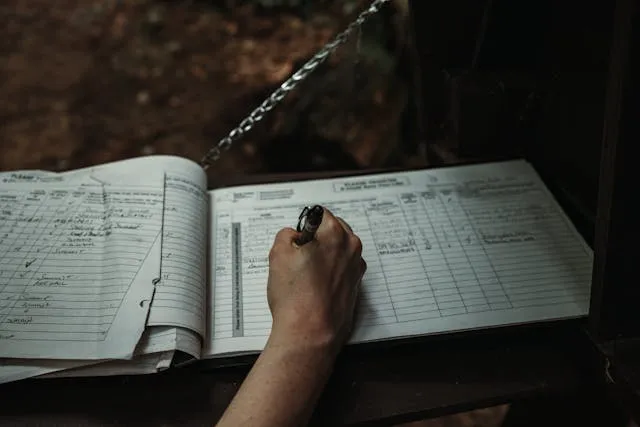
ESA record-keeping requirements
Employers must maintain detailed records, including:
- Hours worked each day and week.
- Wage rates and gross earnings
- Overtime hours
- Vacation and holiday pay
Records must be kept for at least two years and, in practice, longer for audit protection. They must be made available upon request.
Why is this ESA violation expensive?
Even if wages are paid correctly, inadequate records constitute an ESA violation. During inspections, missing records often result in penalties and assumptions of non-compliance.
Construction-specific risk factors
- Paper timesheets are lost or damaged on job sites.
- Inconsistent reporting across multiple projects
- Supervisor-approved hours without verification
Cost impact
Administrative monetary penalties for ESA violations typically start at approximately $250–$350 for a first contravention, escalate to $500 for a second, and $1,000 or more for repeat violations within three years, per provision, per employee. Post‑2024 enforcement changes allow multiples up to $5,000 in certain circumstances.
Poor records can trigger:
- Fines per violation
- Expanded audits
- Increased scrutiny on future projects
How to avoid it
- Use centralized, digital workforce management systems.
- Enforce consistent time capture across all sites.
- Train forepersons on compliance responsibilities.
- Conduct internal audits before inspections occur.
Why ESA Compliance Is a Business Priority — Not Just an HR Issue
ESA violations are not minor paperwork errors. In construction, penalties are assessed per employee, which can quickly increase exposure. They directly affect:
- Labor costs and profitability
- Eligibility for public and private contracts
- Reputation with workers and regulators
- Risk exposure during audits and disputes
For construction businesses operating across multiple sites and crews, manual compliance is not sustainable.
How Lumber Helps Canadian Construction Companies Reduce ESA Risk
Lumber is purpose-built for construction workforce management. For Canadian contractors, Lumber helps reduce ESA violations by:
- Accurately tracking hours worked across job sites.
- Automating overtime, vacation, and holiday pay calculations
- Centralizing employee records for audit readiness
- Providing clear visibility from field to payroll
By replacing fragmented spreadsheets and paper-based processes, construction companies gain the controls needed to stay compliant without slowing operations.
Penalties, Prosecution, and Enforcement Reality
ESA violations can quickly add up. In addition to back pay:
- Administrative monetary penalties escalate with repeat violations (per employee, per provision)
- Compliance orders may require public posting.
- Prosecution is rare but possible, with fines reaching up to $100,000 for corporations.
Ministry inspectors have broad authority, and missing records or inconsistent explanations often expand the scope of an inspection.
Final Thoughts
ESA violations can cost Ontario construction businesses thousands of dollars, often due to the complexity of compliance and misunderstandings rather than intentional misconduct. The most expensive mistakes are also the most preventable.
By understanding common ESA violations, tightening internal processes, and leveraging construction-specific workforce technology, employers can protect their business, their workers, and their bottom line.
Staying compliant with the ESA is not just about avoiding penalties; it is essential for building a sustainable construction business in Ontario’s increasingly regulated labor environment.
Lorem ipsum dolor sit amet, consectetur adipiscing elit. Donec ullamcorper mattis lorem non. Ultrices praesent amet ipsum justo massa. Eu dolor aliquet risus gravida nunc at feugiat consequat purus. Non massa enim vitae duis mattis. Vel in ultricies vel fringilla.
Introduction
Mi tincidunt elit, id quisque ligula ac diam, amet. Vel etiam suspendisse morbi eleifend faucibus eget vestibulum felis. Dictum quis montes, sit sit. Tellus aliquam enim urna, etiam. Mauris posuere vulputate arcu amet, vitae nisi, tellus tincidunt. At feugiat sapien varius id.
Eget quis mi enim, leo lacinia pharetra, semper. Eget in volutpat mollis at volutpat lectus velit, sed auctor. Porttitor fames arcu quis fusce augue enim. Quis at habitant diam at. Suscipit tristique risus, at donec. In turpis vel et quam imperdiet. Ipsum molestie aliquet sodales id est ac volutpat.


Ipsum sit mattis nulla quam nulla. Gravida id gravida ac enim mauris id. Non pellentesque congue eget consectetur turpis. Sapien, dictum molestie sem tempor. Diam elit, orci, tincidunt aenean tempus. Quis velit eget ut tortor tellus. Sed vel, congue felis elit erat nam nibh orci.

Dolor enim eu tortor urna sed duis nulla. Aliquam vestibulum, nulla odio nisl vitae. In aliquet pellentesque aenean hac vestibulum turpis mi bibendum diam. Tempor integer aliquam in vitae malesuada fringilla.
Elit nisi in eleifend sed nisi. Pulvinar at orci, proin imperdiet commodo consectetur convallis risus. Sed condimentum enim dignissim adipiscing faucibus consequat, urna. Viverra purus et erat auctor aliquam. Risus, volutpat vulputate posuere purus sit congue convallis aliquet. Arcu id augue ut feugiat donec porttitor neque. Mauris, neque ultricies eu vestibulum, bibendum quam lorem id. Dolor lacus, eget nunc lectus in tellus, pharetra, porttitor.
Ipsum sit mattis nulla quam nulla. Gravida id gravida ac enim mauris id. Non pellentesque congue eget consectetur turpis. Sapien, dictum molestie sem tempor. Diam elit, orci, tincidunt aenean tempus. Quis velit eget ut tortor tellus. Sed vel, congue felis elit erat nam nibh orci.
Mi tincidunt elit, id quisque ligula ac diam, amet. Vel etiam suspendisse morbi eleifend faucibus eget vestibulum felis. Dictum quis montes, sit sit. Tellus aliquam enim urna, etiam. Mauris posuere vulputate arcu amet, vitae nisi, tellus tincidunt. At feugiat sapien varius id.
Eget quis mi enim, leo lacinia pharetra, semper. Eget in volutpat mollis at volutpat lectus velit, sed auctor. Porttitor fames arcu quis fusce augue enim. Quis at habitant diam at. Suscipit tristique risus, at donec. In turpis vel et quam imperdiet. Ipsum molestie aliquet sodales id est ac volutpat.
Mi tincidunt elit, id quisque ligula ac diam, amet. Vel etiam suspendisse morbi eleifend faucibus eget vestibulum felis. Dictum quis montes, sit sit. Tellus aliquam enim urna, etiam. Mauris posuere vulputate arcu amet, vitae nisi, tellus tincidunt. At feugiat sapien varius id.
Eget quis mi enim, leo lacinia pharetra, semper. Eget in volutpat mollis at volutpat lectus velit, sed auctor. Porttitor fames arcu quis fusce augue enim. Quis at habitant diam at. Suscipit tristique risus, at donec. In turpis vel et quam imperdiet. Ipsum molestie aliquet sodales id est ac volutpat.
- Lectus id duis vitae porttitor enim gravida morbi.
- Eu turpis posuere semper feugiat volutpat elit, ultrices suspendisse. Auctor vel in vitae placerat.
- Suspendisse maecenas ac donec scelerisque diam sed est duis purus.
Lectus leo massa amet posuere. Malesuada mattis non convallis quisque. Libero sit et imperdiet bibendum quisque dictum vestibulum in non. Pretium ultricies tempor non est diam. Enim ut enim amet amet integer cursus. Sit ac commodo pretium sed etiam turpis suspendisse at.
Tristique odio senectus nam posuere ornare leo metus, ultricies. Blandit duis ultricies vulputate morbi feugiat cras placerat elit. Aliquam tellus lorem sed ac. Montes, sed mattis pellentesque suscipit accumsan. Cursus viverra aenean magna risus elementum faucibus molestie pellentesque. Arcu ultricies sed mauris vestibulum.

Critical Construction Compliance | Awareness Week
Mar 16, 2026
Apr 15, 2026
Nov 30, 2026
Dec 15, 2026
Essential resources for contractors