What is Certified Payroll in Construction? A Complete Guide

.webp)


Certified payroll is a vital component in the construction industry, serving as a cornerstone for ensuring transparency and accountability on job sites. As required by the Davis-Bacon Act and related state laws, certified payroll helps enforce prevailing wage laws that protect workers from being underpaid. This process requires contractors on federally funded projects to submit weekly payroll records to confirm that workers receive fair wages and benefits in line with local standards. By maintaining rigorous documentation and oversight, certified payroll is critical in promoting compliance and ethical practices within the industry. Understanding its importance is key to appreciating how it impacts the integrity of construction projects nationwide.
Importance of Certified Payroll in Construction
Certified payroll is a specialized form of payroll reporting that is required on all publicly funded construction projects. This type of reporting is critical because it ensures workers are paid prevailing wages as determined by the government under the Davis-Bacon Act and additional state law equivalents. It includes detailed records such as the workers' wages, the hours worked, and the classification of the work performed. Each week, contractors must submit a certified payroll report (CPR), which is scrutinized by overseeing agencies to ensure compliance with the stipulated wage regulations.
Benefits of using certified payroll in the construction industry
Implementing certified payroll systems in the construction industry brings several significant benefits:
- Compliance with Legal Standards: Certified payroll helps contractors comply with the laws that mandate payment of prevailing wages on government-funded projects, avoiding legal repercussions such as fines or project shutdowns.
- Prevention of Wage Theft: It safeguards workers from wage theft by ensuring they are paid fairly for all hours worked, including overtime and benefits, thereby promoting worker satisfaction and reducing turnover.
- Enhanced Credibility with Clients: Contractors that adhere to certified payroll requirements enhance their credibility and are more likely to secure additional contracts, as this adherence demonstrates reliability and ethical business practices.
- Streamlined Payroll Management: While initially complex, over time, certified payroll systems streamline payroll processes by standardizing wage calculations and reporting for all employees, thus reducing administrative overhead.
Ensuring Transparency with Certified Payroll
How certified payroll enhances transparency on construction sites
Certified payroll is pivotal in enhancing transparency on construction sites by mandating meticulous documentation of all labor-related transactions. This documentation provides an auditable trail that can be used to verify that workers are receiving their rightful pay and that funding is being used appropriately. This level of detail for overseeing agencies and project owners supports effective project management and oversight, ensuring that labor costs accurately reflect the work being performed. Moreover, the public nature of these reports (as they can be requested by the public) further increases accountability, as it subjects contractors to broader scrutiny by stakeholders, including worker unions and community groups.
Examples of how certified payroll helps track labor costs accurately
The methodical nature of certified payroll reporting provides several tangible examples of its efficacy in tracking labor costs:
- Detailed Work Classifications: Each worker's role and the corresponding tasks are meticulously documented, which helps in verifying that wage rates are appropriate for the work performed.
- Hourly Tracking: The requirement to report hours worked weekly helps prevent discrepancies in wage distribution and provides clear insights into labor allocation and utilization.
- Overtime Accountability: Certified payroll requires detailed recording of overtime hours, ensuring that workers are compensated correctly, which is critical for budget tracking and controlling project costs.
- Comparison Across Projects: Certified payroll records allow project managers and stakeholders to compare labor costs across different projects, which aids in forecasting and budgeting for future projects.
In conclusion, certified payroll is not merely about compliance; it is an essential tool in the construction industry for maintaining transparency, ensuring accountability, and fostering a fair working environment. This system benefits workers by safeguarding their wages and helps contractors manage budgets more efficiently and compete more effectively in the market.
Promoting Accountability through Certified Payroll
Role of certified payroll in holding contractors and subcontractors accountable
Certified payroll is pivotal in ensuring that contractors and subcontractors on federally funded construction projects adhere to stipulated wage laws. This system requires these entities to submit weekly payroll reports that detail the wages paid to each worker, their classifications, the hours worked, and any deductions or benefits. This rigorous reporting process is designed to prevent wage theft and underpayment. By holding these specifics to a public standard, certified payroll fosters transparency that makes it harder for any malpractice to remain concealed. Consequently, it protects workers from potential exploitation and ensures that contractors and subcontractors remain accountable to regulatory standards.
How certified payroll helps ensure compliance with labor laws and regulations
The compliance aspect of certified payroll is enforced through its strict reporting requirements, which are aligned with the Davis-Bacon Act and related state laws. These standards are in place to ensure that workers receive prevailing wages and benefits appropriate to their roles and geographic locations. Regular audits and cross-checks of certified payroll records against employee records allow for thorough oversight. This system not only deters intentional non-compliance but also helps catch unintentional errors in wage payment. As a result, they have certified payroll acts as a powerful tool to uphold labor laws and protect worker rights across the construction industry.
Challenges in Implementing Certified Payroll
Common obstacles faced in implementing certified payroll systems
Despite its benefits, implementing certified payroll systems isn't without challenges. One common obstacle is the lack of technological resources or expertise among small—to medium-sized contractors. These firms often struggle with the transition from traditional payroll methods to an automated, compliance-focused payroll system. Additionally, the complexity of maintaining detailed records and understanding the nuances of compliance for different roles and regions can be overwhelming. Resistance to change and the fear of increased scrutiny also contribute to hesitance in adopting these systems.
Solutions to address challenges and ensure successful adoption
To overcome these challenges, several practical solutions can be applied:
- Training and Education: Offering comprehensive training sessions for contractors and their payroll staff can demystify the processes involved in certified payroll reporting.
- Technology Integration: Leveraging modern payroll software that is designed to handle certified payroll requirements can simplify the reporting process. These systems automate calculations, generate reports, and ensure compliance through built-in checks.
- Professional Support: Employing the services of professionals who specialize in labor compliance can provide the needed expertise to navigate complex regulations.
- Governmental Assistance: Initiatives like government-funded programs to aid smaller contractors in acquiring and setting up certified payroll systems can significantly ease the transition.
By addressing these challenges with targeted solutions, the construction industry can enhance compliance and efficiency, paving the way for more accountable and transparent operations.
Lumber Payroll
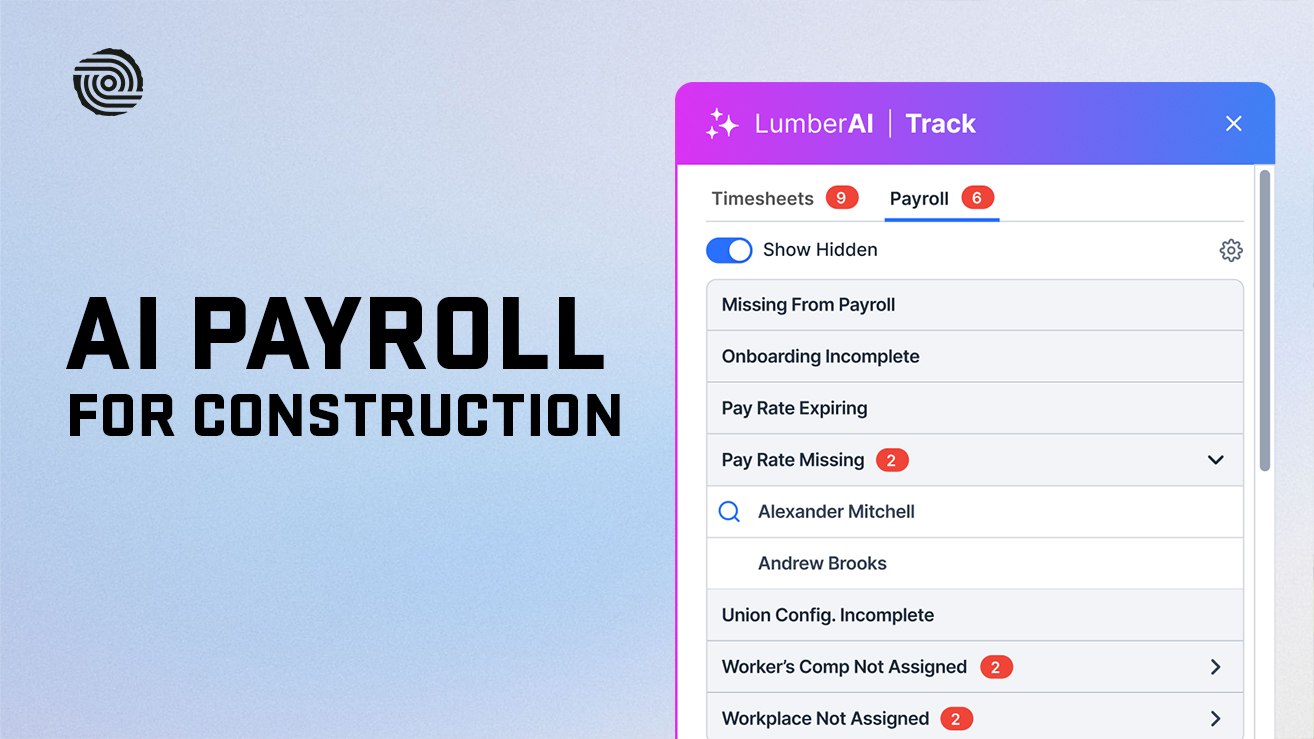
Lumber Payroll revolutionizes how construction businesses manage their workforce. By integrating your time tracking application with Lumber payroll, duplication is significantly reduced, saving valuable administrative hours and minimizing errors. This integration helps streamline operations and ensures that the data entered is consistent across platforms.
Manual labor in payroll processing can be cumbersome and error-prone. With Lumber Payroll, these concerns are drastically diminished. The system automatically updates critical components such as mandatory breaks, prevailing wages, and overtime pay calculations. This automation not only simplifies the payroll process but also ensures strict compliance with labor laws and regulations, effectively relieving the burden of manual compliance oversight.
Payroll Servicing
An exceptional feature of Lumber Payroll is the unlimited support provided by payroll experts. Whenever issues arise, or clarifications are needed, expert assistance is just a call or click away. This support is invaluable in maintaining a smooth payroll process, ensuring businesses can focus more on operational activities than payroll management complexities.
Flexible Payment Process
Flexibility in payroll processing is crucial in the construction industry, given its dynamic and project-focused nature. Lumber Payroll offers a flexible payment scheme that accommodates various payroll needs, including off-cycle payroll for contract workers, reimbursements, and bonuses. This adaptability helps construction businesses manage their finances better and react promptly to changes in their labor force.
Real-time Job Costing
An innovative feature of Lumber Payroll is real-time job costing, which allows managers to monitor labor costs as they accrue. This feature ensures that project budgets are adhered to and adjustments can be made swiftly when necessary. Businesses can make informed decisions by having a clear, current view of labor expenses, enhancing overall project efficiency and profitability. Consider booking a demonstration with Lumber Payroll to see these features in action.
Certified payroll is not just a regulatory requirement but a fundamental practice that enhances transparency and accountability in the construction industry. By meticulously recording and reporting wages, working hours, and other pertinent details, certified payroll ensures that workers are compensated fairly according to prevailing wage laws and project standards. This practice safeguards workers' rights and project integrity, making it a critical component of ethical construction management. As the construction industry continues to evolve, the role of certified payroll in maintaining compliance and fostering trust among stakeholders is more crucial than ever.
FAQs
What is certified payroll in construction?
Certified payroll is a reporting system for federally funded construction projects, ensuring workers are paid prevailing wages as per the Davis-Bacon Act. Contractors submit weekly reports on wages, hours worked, and job classifications for compliance.
How do I start certified payroll in Oregon?
To start certified payroll in Oregon, register with the Oregon Bureau of Labor and Industries, and use compatible payroll software to generate weekly certified payroll reports. Submit them online through the Oregon Prevailing Wage Rate Online Portal.
How do I calculate fringe benefits for certified payroll?
Fringe benefits include health insurance, retirement, and other benefits. Calculate by adding the total value of these benefits to the worker's base wage, ensuring it meets the prevailing wage requirements for the worker's classification and location.
Lorem ipsum dolor sit amet, consectetur adipiscing elit. Donec ullamcorper mattis lorem non. Ultrices praesent amet ipsum justo massa. Eu dolor aliquet risus gravida nunc at feugiat consequat purus. Non massa enim vitae duis mattis. Vel in ultricies vel fringilla.
Introduction
Mi tincidunt elit, id quisque ligula ac diam, amet. Vel etiam suspendisse morbi eleifend faucibus eget vestibulum felis. Dictum quis montes, sit sit. Tellus aliquam enim urna, etiam. Mauris posuere vulputate arcu amet, vitae nisi, tellus tincidunt. At feugiat sapien varius id.
Eget quis mi enim, leo lacinia pharetra, semper. Eget in volutpat mollis at volutpat lectus velit, sed auctor. Porttitor fames arcu quis fusce augue enim. Quis at habitant diam at. Suscipit tristique risus, at donec. In turpis vel et quam imperdiet. Ipsum molestie aliquet sodales id est ac volutpat.


Ipsum sit mattis nulla quam nulla. Gravida id gravida ac enim mauris id. Non pellentesque congue eget consectetur turpis. Sapien, dictum molestie sem tempor. Diam elit, orci, tincidunt aenean tempus. Quis velit eget ut tortor tellus. Sed vel, congue felis elit erat nam nibh orci.

Dolor enim eu tortor urna sed duis nulla. Aliquam vestibulum, nulla odio nisl vitae. In aliquet pellentesque aenean hac vestibulum turpis mi bibendum diam. Tempor integer aliquam in vitae malesuada fringilla.
Elit nisi in eleifend sed nisi. Pulvinar at orci, proin imperdiet commodo consectetur convallis risus. Sed condimentum enim dignissim adipiscing faucibus consequat, urna. Viverra purus et erat auctor aliquam. Risus, volutpat vulputate posuere purus sit congue convallis aliquet. Arcu id augue ut feugiat donec porttitor neque. Mauris, neque ultricies eu vestibulum, bibendum quam lorem id. Dolor lacus, eget nunc lectus in tellus, pharetra, porttitor.
Ipsum sit mattis nulla quam nulla. Gravida id gravida ac enim mauris id. Non pellentesque congue eget consectetur turpis. Sapien, dictum molestie sem tempor. Diam elit, orci, tincidunt aenean tempus. Quis velit eget ut tortor tellus. Sed vel, congue felis elit erat nam nibh orci.
Mi tincidunt elit, id quisque ligula ac diam, amet. Vel etiam suspendisse morbi eleifend faucibus eget vestibulum felis. Dictum quis montes, sit sit. Tellus aliquam enim urna, etiam. Mauris posuere vulputate arcu amet, vitae nisi, tellus tincidunt. At feugiat sapien varius id.
Eget quis mi enim, leo lacinia pharetra, semper. Eget in volutpat mollis at volutpat lectus velit, sed auctor. Porttitor fames arcu quis fusce augue enim. Quis at habitant diam at. Suscipit tristique risus, at donec. In turpis vel et quam imperdiet. Ipsum molestie aliquet sodales id est ac volutpat.
Mi tincidunt elit, id quisque ligula ac diam, amet. Vel etiam suspendisse morbi eleifend faucibus eget vestibulum felis. Dictum quis montes, sit sit. Tellus aliquam enim urna, etiam. Mauris posuere vulputate arcu amet, vitae nisi, tellus tincidunt. At feugiat sapien varius id.
Eget quis mi enim, leo lacinia pharetra, semper. Eget in volutpat mollis at volutpat lectus velit, sed auctor. Porttitor fames arcu quis fusce augue enim. Quis at habitant diam at. Suscipit tristique risus, at donec. In turpis vel et quam imperdiet. Ipsum molestie aliquet sodales id est ac volutpat.
- Lectus id duis vitae porttitor enim gravida morbi.
- Eu turpis posuere semper feugiat volutpat elit, ultrices suspendisse. Auctor vel in vitae placerat.
- Suspendisse maecenas ac donec scelerisque diam sed est duis purus.
Lectus leo massa amet posuere. Malesuada mattis non convallis quisque. Libero sit et imperdiet bibendum quisque dictum vestibulum in non. Pretium ultricies tempor non est diam. Enim ut enim amet amet integer cursus. Sit ac commodo pretium sed etiam turpis suspendisse at.
Tristique odio senectus nam posuere ornare leo metus, ultricies. Blandit duis ultricies vulputate morbi feugiat cras placerat elit. Aliquam tellus lorem sed ac. Montes, sed mattis pellentesque suscipit accumsan. Cursus viverra aenean magna risus elementum faucibus molestie pellentesque. Arcu ultricies sed mauris vestibulum.

Critical Construction Compliance | Awareness Week
Mar 16, 2026
Apr 15, 2026
Nov 30, 2026
Dec 15, 2026
Essential resources for contractors