Payroll Tip: Year-End Payroll 2025 – Get Ready Now with AI-Powered Automation


As the year draws to a close in 2025, businesses across various industries are gearing up for the year-end payroll processes. For construction companies, this critical period is more demanding, given the unique challenges, complexities, and new regulatory requirements that define this field.
From managing a diverse and mobile workforce across multiple job sites, to handling varying wage rates, union requirements, and evolving compliance mandates like the Davis-Bacon 30% rule reinstatement, construction companies need specialized tools and experienced payroll professionals to streamline operations.
In this comprehensive guide, we'll discuss how construction firms can prepare themselves for year-end payroll processing, provide actionable tips about what you must do before tax season, and highlight how modern AI-powered payroll solutions can reduce errors, save time, and ensure compliance.
What is the Year-End Payroll Process?
The year-end payroll process for US-based construction firms encompasses the comprehensive collection of payroll data, tax withholding verification, reconciliation of records, preparation and distribution of W-2 and 1099 forms, tax filings, employee benefit reporting, year-end adjustments, and meticulous compliance with federal and state labor laws.
In 2025, this process has evolved to include automated compliance monitoring, real-time regulatory updates, and AI-powered anomaly detection to catch errors before they become costly mistakes.
Most modern construction payroll systems today integrates directly with project management platforms, enabling seamless tracking of labor costs across multiple job sites and ensuring that all prevailing wage, union, and certified payroll requirements are met automatically.
10 Essential Tips from Construction Payroll Experts
Tip 1: Review Payroll Data and Documentation - Leverage AI Tools for Accuracy
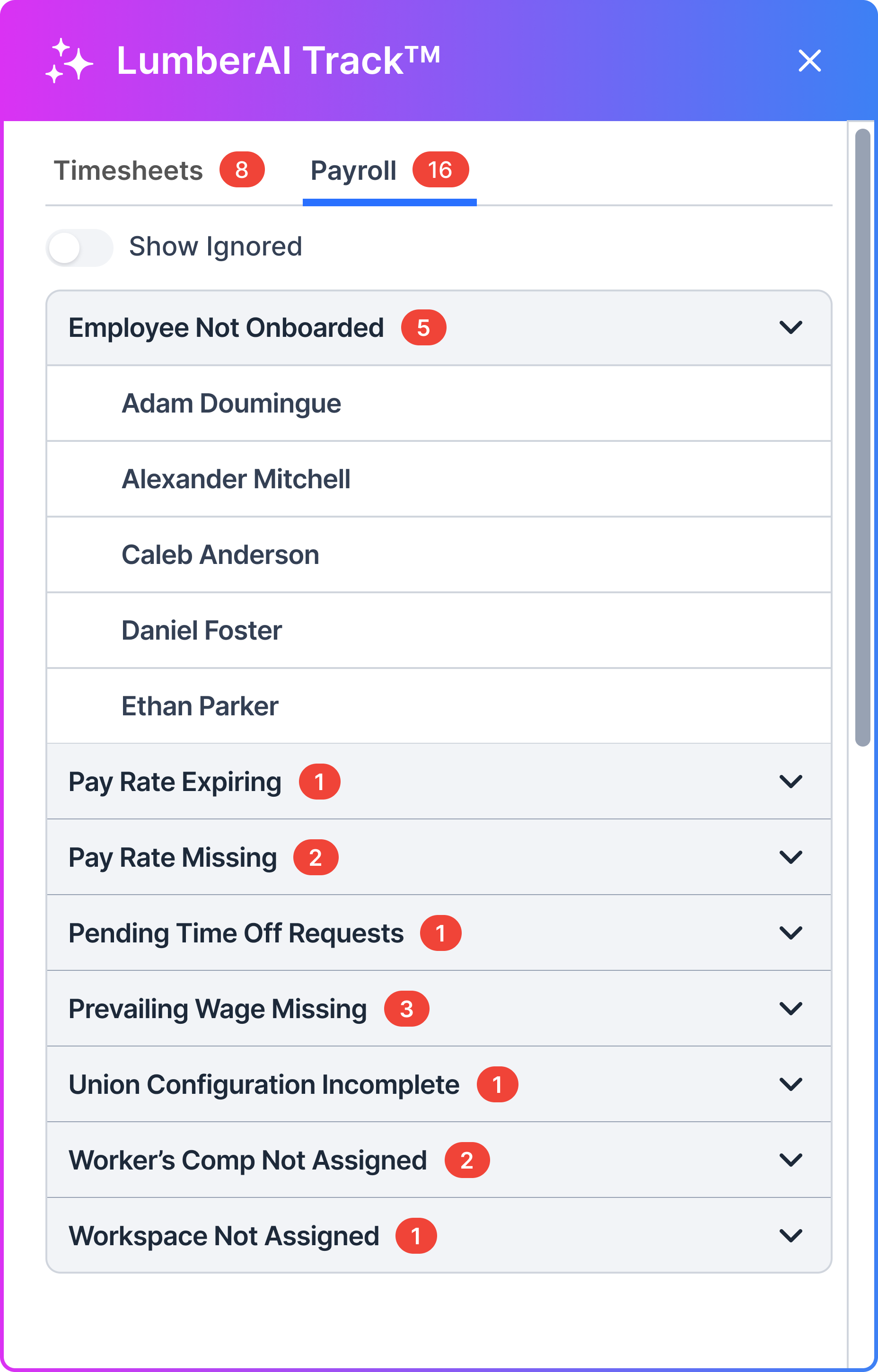
Accurate payroll data is the bedrock of successful year-end payroll processing. It not only ensures the proper calculation of employee wages but also helps in precise tax calculation and reporting.
Presently, construction companies have the advantage of AI-powered payroll anomaly detection systems that automatically flag inconsistencies, unusual pay patterns, and potential compliance violations before they escalate into penalties. These tools can identify discrepancies in real-time, significantly reducing the need for manual data review.
Importance of Accurate Payroll Data
Meticulously reviewing payroll data can help identify any discrepancies and resolve them ahead of the year-end, thereby reducing any last-minute stress. With AI-assisted reviews, this process is now faster and more reliable. This includes employee details, payroll deductions, and changes in employment status.
- Deploy AI anomaly detection to automatically cross-reference
- Wage patterns against historical data
- Deductions for alignment with benefit plans
- Hours worked against project timesheets
- Tax withholding amounts for accuracy
- Conducting a Thorough Review of Employee Information
- Verifying employee details such as names, addresses, and Social Security Numbers (SSNs). Inaccurate data can lead to incorrect tax filings.
- Updating employee status, whether full-time or part-time, is critical as it directly impacts tax liabilities.
- Ensuring the accuracy of payroll deductions like health insurance, retirement contributions, and wage garnishments is crucial, as these factors significantly influence net pay and taxes.
Additionally, ensure the following -
- Worker classification aligns with current DOL standards (especially critical post-Davis-Bacon 30% rule reinstatement)
- All prevailing wage rates are current for the geographic locations where your projects operate
- Union membership and contribution records are accurate and up-to-date
Tip 2: Plan for Year-End Tax Filings and Stay Ahead of 2025 Regulatory Changes
Once your regular payrolls have been neatly executed, the next step is to focus on the year-end tax filings. It is essential to understand and efficiently manage the related tax forms, ensure timely tax deposits and submission, and stay knowledgeable about current laws and regulations.
In 2025, the regulatory landscape continues to evolve, with ongoing compliance requirements and potential updates to tax laws. Construction companies must also remain vigilant about prevailing wage determination changes and certified payroll reporting standards.
Overview of Key Tax Forms and Deadlines
Familiarizing yourself with various tax forms and their deadlines is the first step toward successful tax filing. You should be aware of forms like W-2, 1099, and 941.
- Form W-2 for Employees: This form reports an employee's annual wages and the amount of taxes withheld from their paycheck. It is due by January 31, 2026.
- Form 1099 for Contractors and Freelancers: If you've hired contractors for your construction project, then Form 1099-MISC must be used to report their payments. The deadline for this form submission is also January 31, 2026.
- Form 941 for Federal Tax Withholding: This quarterly form is used to report the taxes you withhold from your employees' paychecks. Remember that these tax filings' due dates vary each quarter.
- Enhanced Compliance Requirements
- Certified Payroll Forms (Form WH-347): If you work on prevailing wage projects (federal or state-funded), ensure your certified payroll reports are accurate and submitted on time. The reinstatement of the Davis-Bacon 30% rule effective October 23, 2023, continues to impact how prevailing wages are determined in 2025. Ensure your payroll reflects the correct wage determinations for each worker classification. Know more about the new WH-37 form.
- Prevailing Wage Documentation: Maintain detailed records showing:
- The prevailing wage rates applied for each project location
- Worker classification and corresponding wage rates
- Fringe benefits paid in compliance with wage determinations
Consult with a Tax Professional to Ensure Compliance
Engaging with a tax professional is highly advisable to avoid any mistakes or unnecessary penalties. Tax experts can assist you in complying with complex tax laws and minimizing your liabilities. In 2025, tax professionals familiar with construction-specific regulations and the updated Davis-Bacon requirements are particularly valuable.
Understand Changes to Tax Laws and Regulations
Stay updated about yearly changes in tax laws and regulations affecting the construction industry. Key 2025 considerations include:
- Davis-Bacon 30% Rule Impact: The reinstatement of the 30% rule for determining prevailing wages remains in effect. This impacts wage rate calculations, especially in instances where the dominant wage is unclear.
- State Prevailing Wage Updates: Several states have updated their prevailing wage schedules for 2025. Verify the rates applicable to your project locations.
- Certified Payroll Requirements: Ensure you understand the most current certified payroll submission requirements for government-funded projects.
Tip 3: Communicate with Employees – Transparency in 2025 Payroll Practices
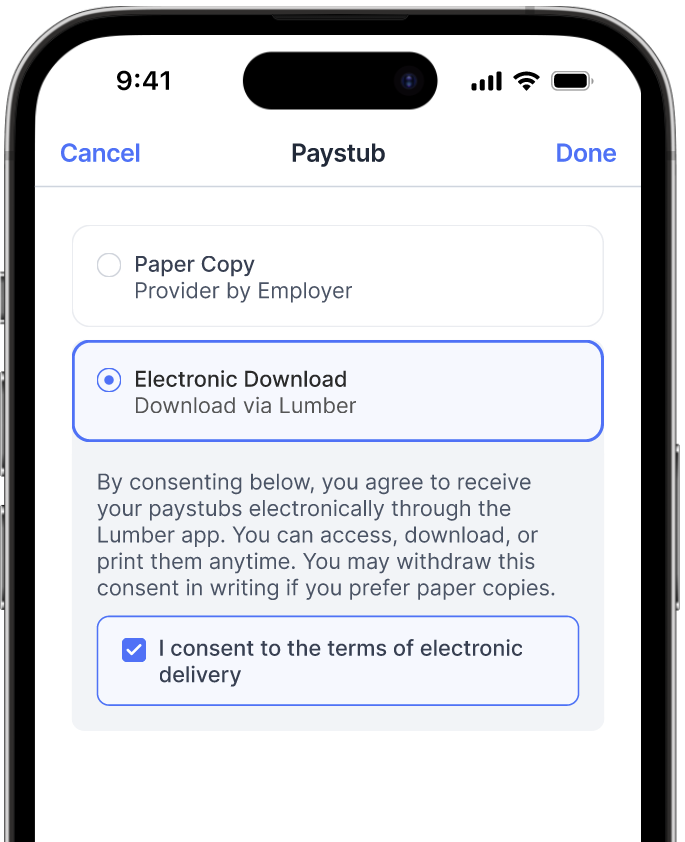
Proper communication is key to ensuring a smooth year-end payroll process and building employee trust.
- Inform employees about year-end payroll processes and deadlines: Begin by making your employees aware of what the year-end payroll process entails and the critical deadlines involved. A clear timeline will help them understand when to expect their year-end pay stubs, W-2s, or other documents.
- Address any potential changes in payroll procedures: In 2025, communicate any new system implementations, especially if your company is transitioning to AI-powered payroll automation. Let them know if there are any changes in the payroll procedures. Keep employees in the loop, whether it's new submission dates for time sheets, modifications in calculating overtime, or new digital timesheet submission requirements.
- Remind employees of direct deposit options: It's also beneficial to remind them about direct deposit options and mobile app capabilities, encouraging them to avoid delayed or lost paychecks. If your company uses Lumber or similar platforms, educate employees on how to access their pay information in real-time through the mobile app.
- Explain any changes in tax withholding rates: Lastly, if there are any changes in tax withholding rates, provide a simple explanation. This approach helps employees understand their paychecks better, leading to fewer queries and confusion at the year-end.
- Additional considerations:
- Explain prevailing wage compliance: If your company works on prevailing wage projects, help employees understand how their wages are determined and calculated.
- Address worker classification: Ensure employees understand their classification (journeyman, apprentice, laborer, etc.) and how it impacts their wages.
- Highlight compliance importance: Reinforce the importance of accurate time tracking and reporting, especially for certified payroll projects.
Tip 4: Reconcile and Review Payroll Records – Use Automation to Reduce Errors
.png)
The next step in preparing for the year-end is to reconcile and review all your payroll records.
- Perform a thorough reconciliation of payroll records: Ensure that all payments to employees and taxes have been accurately recorded and everything is present in your books. Cross-reference your payroll system with your account books to confirm that everything adds up.
- Flag discrepancies automatically between payroll system and accounting records
- Identify duplicate payments or missing entries
- Cross-reference job site timesheets with payroll deductions
- Highlight prevailing wage compliance gaps by comparing paid rates with current wage determinations
- Compare payroll registers with payroll tax reports: Next, line up your payroll : registers directly with your payroll tax reports. This will aid in capturing any discrepancies between what was paid out and what was reported.
- Address discrepancies and correct errors: Rectify errors promptly to avoid unplanned tax liabilities or penalties. Ensure that all payments are accounted for correctly. With AI-powered systems, errors can be identified within hours rather than during post-year-end audits.
- Review year-end payroll reports: Pay close attention to your year-end payroll reports. These offer an overview of your total compensation activities and can help identify anomalies. Modern payroll software now provides detailed analytics dashboards showing:
- Total labor costs by project
- Prevailing wage compliance status
- Union contribution accuracy
- Certified payroll readiness
- Verify the accuracy of payroll expenses and deductions: Scrupulously examine payroll expenses and deductions for the entire year. Confirm that totals are accurate and that no inappropriate deductions were made.
- Analyze quarterly payroll tax reports: Finally, study your quarterly payroll tax reports. These documents will provide an in-depth understanding of your tax duty performance, helping you to anticipate future tax liabilities. Include certified payroll reports in this analysis to ensure all prevailing wage and fringe benefit payments are accurately reflected.
- Perform a thorough reconciliation of payroll records: Ensure that all payments to employees and taxes have been accurately recorded and everything is present in your books. Cross-reference your payroll system with your account books to confirm that everything adds up.
Tip 5: Review Employee Benefits, Bonuses, and Compensation – Build a Competitive 2025 Package
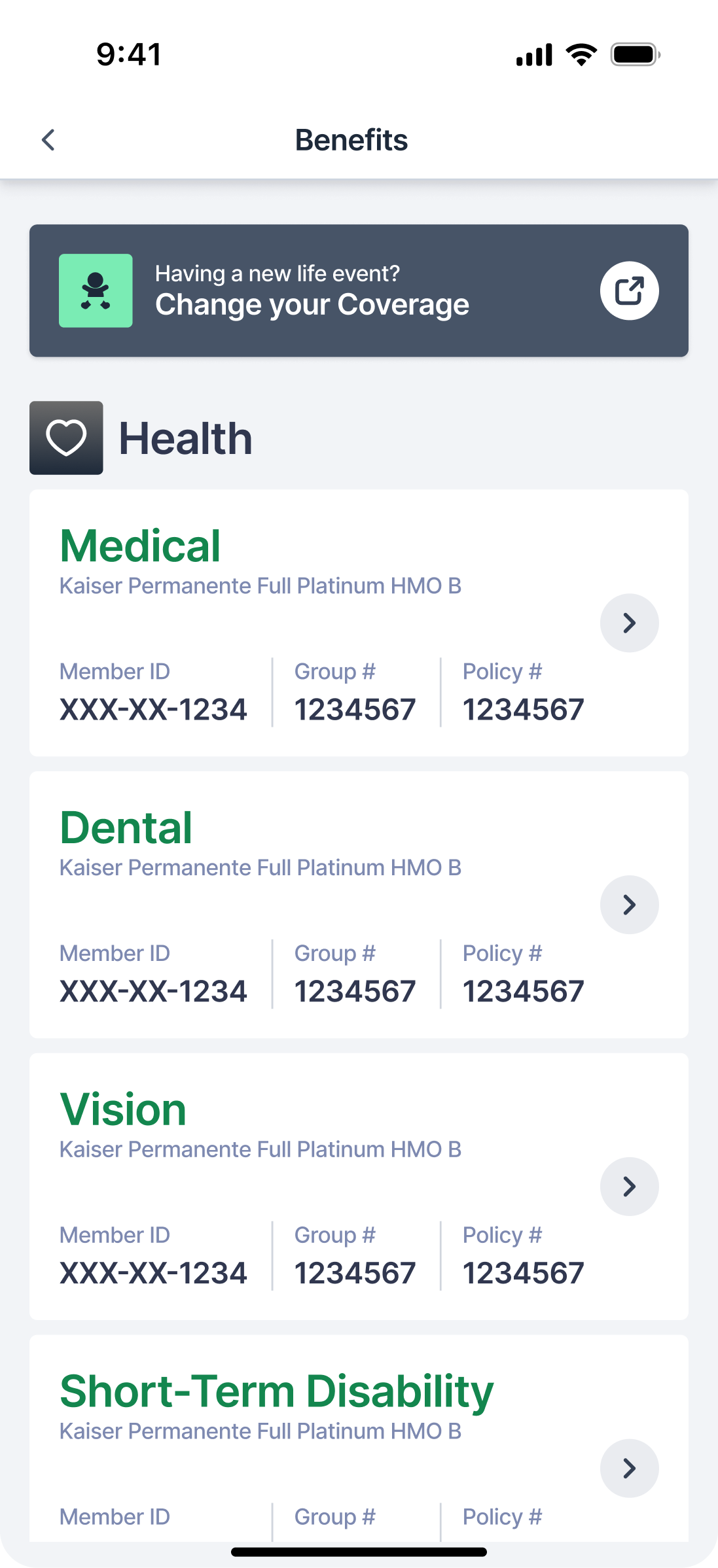
When it comes to year-end payroll, one major aspect that small businesses frequently overlook is employee benefits. It is essential to review the benefit programs your business provides and make any necessary adjustments for the upcoming year.
- Assess Employee Benefits Programs for Year-End Adjustments: Consider health insurance, retirement plans, vacation policies, and other benefits that need adjustments or carry over into the new year and also evaluate the following:
- Training and development programs to upskill your workforce
- Safety incentive programs that reward employees for maintaining strong safety records
- Flexible work arrangements or remote option benefits for administrative staff
- Mental health and wellness programs that address construction industry burnout
- Check Health Insurance Contributions: Health insurance contributions may fluctuate annually, and it's crucial to review planned contributions to ensure they align with your company's budget and employees' needs. Consider whether your health insurance plan covers:
- Mental health services and counseling
- Preventative care for construction-related injuries
- Telehealth options for remote job sites
- Review Retirement Plans and Contributions: Similarly, review the retirement plan offerings and respective company contributions. Ensure your business stays competitive in the benefits landscape while maintaining affordable costs.
- Consider Year-End Bonuses and Compensation Adjustments: As the year ends, consider giving out bonuses or adjusting employee salaries. Performance-based incentives tied to safety records, project completion, and employee retention are becoming increasingly popular among construction companies.
- Evaluate Performance-Based Bonuses: The year-end is also the perfect time to review performance-based bonuses. Make sure they're calculated based on accurate and fair performance reviews. Consider bonuses tied to:
- Project safety milestones
- Certified payroll accuracy
- Team collaboration and mentorship
- Retention of apprentices and junior staff
- Determine Any Necessary Wage Increases: Lastly, remember to assess regular wages. Check the industry standard pay rates, employee performance, and company budget to determine if wage increases are necessary. In 2025, the construction industry continues to face skilled labor shortages, making strategic wage increases a competitive advantage. Compare your wages against:
- Regional prevailing wage rates
- Local construction industry benchmarks
- Union scale requirements
- Competitor offerings in your market
Tip 6: Prepare for Year-End Audits and Reviews
Conducting year-end audits and reviews is a fundamental part of the end-of-year process. It's essential because it helps businesses identify discrepancies, avoid penalties and fines, and maintain transparent records for legal purposes.
Year-end audits are not just about compliance; they ensure that all payroll activities are accurate and complete. A thorough review offers a chance to correct errors before they can lead to significant problems.
- Organize Necessary Payroll Documentation for Audits: Ensure you have all the necessary payroll documentation at your fingertips:
- Timesheets and Attendance Records: These reflect the total number of hours employees worked during the fiscal year and are essential for wage and overtime calculations.
- Worker Classification: If you are working on federal projects, compliance with the Davis Bacon Act is a must. Recheck worker classification in the payroll reports and ensure the correct wage determination according to the Davis-Bacon 30% rule, which has been in effect since October 23, 2023, and remains a critical requirement in 2025. Recheck worker classification in the payroll reports and the correct wage determination according to the prevailing wages in the state/locality where the project is located. Ensure you have used the correct worker classification and have paid the precise wages and fringe benefits.
- Payroll Tax Reports and Filings: These documents give a detailed account of your payroll taxes, including payments and filings. Ensure that certified payroll reports (Form WH-347) are properly documented and filed for all prevailing wage projects, as these are subject to increased scrutiny by government agencies.
- Employee Benefit Plan Records: These show contributions to health and retirement plans and must comply with the ERISA (Employee Retirement Income Security Act) requirements.
- New Audit Requirements for 2025
- Prevailing Wage Compliance Documentation: Maintain records proving compliance with Davis-Bacon wage requirements, including wage rate determinations for each worker classification
- Certified Payroll Audit Trail: Keep digital records of all certified payroll submissions and acknowledgments from government agencies
- Real-Time Compliance Records: If using modern payroll software, generate compliance reports showing real-time monitoring of wage determinations
- Mobile Time Tracking Evidence: Digital timestamps from mobile apps provide stronger audit documentation than traditional timesheet
Tip 7: Leverage AI-Powered Payroll Software and Advanced Technology
Availing payroll software and technology can dramatically ease your year-end payroll management. Especially where construction payroll is concerned, using payroll software purpose-built for the said industry minimizes human error and saves time, ensuring a seamless transition into the new year.
In 2025, the construction payroll landscape has been revolutionized by AI-powered solutions that go far beyond basic payroll processing. Modern payroll software now includes intelligent anomaly detection, real-time compliance monitoring, and automated regulatory updates that keep your business ahead of regulatory changes.
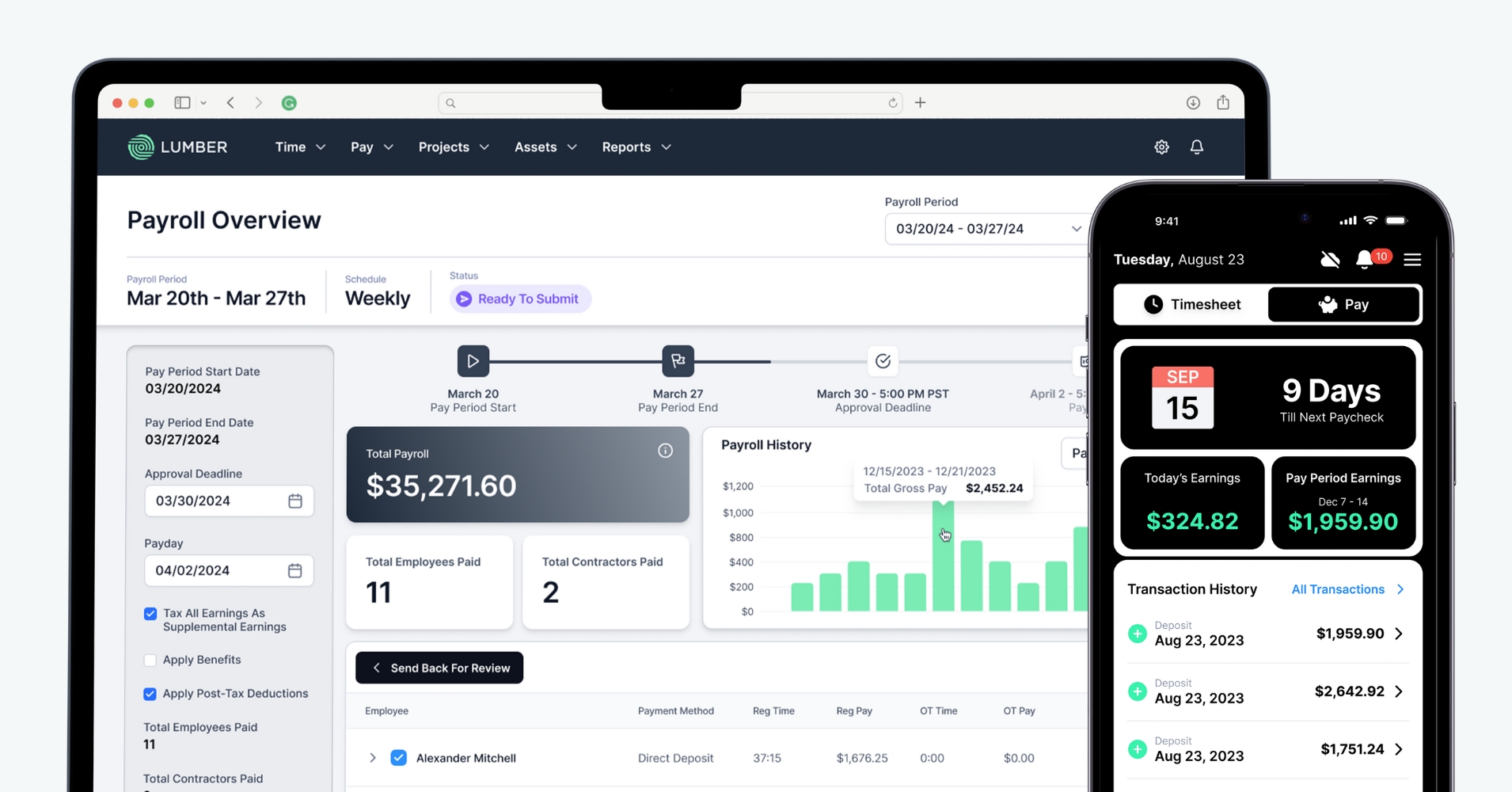
- Utilize Technology for Efficient Payroll Management: Consider cloud-based payroll solutions that allow remote access and real-time data updates. These are especially handy for businesses with remote teams as they allow:
- Field workers to clock in/out from job sites using smartphones
- Real-time visibility into workforce status and productivity
- Automatic integration of time tracking data into payroll
- Paperless onboarding and document management
- Online Payroll Processing and Reporting: Online solutions can simplify payroll processing and generate instant reports, aiding your year-end review. Modern payroll platforms like Lumber provide -
- Real-time dashboard analytics showing labor costs by project, worker classification, and wage rate
- Instant compliance reports verifying prevailing wage adherence
- Automated certified payroll generation for government-funded projects
- Integration with accounting software (QuickBooks, Acumatica, NetSuite) for seamless financial management
- Automation of Payroll Tax Calculations: A prime feature of many software is automated tax calculations. This reduces the risk of miscalculations and non-compliance, a crucial aspect during year-end tax preparations.
- Prevailing wage automation: System automatically applies correct wage rates based on project location, worker classification, and current DOL determinations
- Certified payroll automation: Generates compliant certified payroll reports (WH-347) automatically with correct prevailing wage and fringe benefit calculations
- Union compliance automation: Automatically tracks and calculates union contributions, apprenticeship taxes, and other union-specific requirements
- Multi-state tax automation: Handles varying tax rates across multiple states where your projects operate
- What are the benefits of automating the payroll process? Automating the payroll process is particularly advantageous for construction businesses due to the unique demands of the industry in 2025.
- Enhanced accuracy by reducing potential for errors in complex wage calculations, overtime, prevailing wage rates, and tax withholdings—common challenges in construction
- Real-time error detection: AI-powered anomaly detection identifies wage discrepancies, duplicate payments, and compliance violations within hours, not during post-audit reviews
- Streamlined record-keeping for labor compliance, ensuring adherence to prevailing wage laws, Davis-Bacon 30% rule requirements, and federal/state reporting requirements
- Prevailing wage precision: Automatically applies correct wage determinations by location and worker classification, critical for government-funded projects
- Mobile workforce management: Tracks hours worked across multiple job sites, allocates labor costs accurately, and provides real-time visibility into field productivity
- Transparency for employees: Grants workers easy access to pay information, prevailing wage breakdowns, and benefit contributions through secure mobile apps, reducing disputes and administrative burdens
- Compliance alerts: Automatically monitors regulatory changes and alerts management to new requirements (like prevailing wage rate updates)
- Certified payroll readiness: Maintains audit-ready documentation automatically, reducing year-end stress and audit risk
- Cost savings: Reduces administrative overhead, minimizes compliance penalties, and prevents costly payroll errors
- Strategic workforce insights: Provides data on labor costs, project profitability, and workforce productivity to inform business decisions
The 2025 advantage: Construction companies using AI-powered payroll systems report up to 95% reduction in manual payroll processing time, significantly improved compliance accuracy, and faster identification and resolution of wage-related issues.
Tip 8: Stay Informed About 2025 Payroll Regulatory Updates
As part of your year-end preparations, staying abreast of the changing regulatory landscape is crucial. For construction companies, regulatory compliance has never been more important—or more complex.
Stay updated on changing payroll tax laws and regulations
Payroll tax laws continually change, so ensure you are familiar with the latest laws. Erroneously reported taxes can lead to penalties, a cumbersome situation that no business wants to encounter.
Critical 2025 Regulatory Updates for Construction
1. Davis-Bacon 30% Rule (Now in Full Effect): The reinstatement of the Davis-Bacon 30% rule, effective October 23, 2023, continues to significantly impact how prevailing wages are determined in 2025. This rule affects all federal construction projects and many state-funded projects.
- What it means: When determining the "prevailing wage" rate for a job classification, if the dominant wage is unclear, the Department of Labor uses the wage paid to 30% of workers in that classification in the geographic area. This often results in higher prevailing wage rates than the previous weighted-average method.
- 2025 impact: Many contractors experienced wage rate increases in 2024-2025 due to this rule change. Ensure your payroll reflects the current Davis-Bacon wage determinations for each project.
- Action required: Before each project's start, verify the current prevailing wage rates from the DOL's wage determination website. Many states have issued updated prevailing wage schedules for 2025.
2. Prevailing Wage Rate Updates: The Department of Labor and state agencies regularly update prevailing wage determinations. In 2025, construction companies must:
- Check prevailing wage rates before project initiation
- Monitor for mid-project wage rate adjustments
- Ensure all workers are classified correctly according to wage determination requirements
- Calculate fringe benefits correctly (health insurance, retirement, training contributions, etc.)
3. Certified Payroll Requirements: If you work on prevailing wage projects (federally or state-funded), certified payroll reporting requirements remain stringent in 2025.
Key requirements:
- Submit certified payroll reports (Form WH-347) at least weekly
- Include all employee names, worker classifications, wages paid, and deductions
- Ensure wage rates match current DOL determinations
- Maintain supporting documentation for at least three years
4. Union Compliance Updates: Construction unions regularly update their agreements and contribution requirements. In 2025, construction companies need to ensure:
- Union contribution rates are current in your payroll system
- Apprenticeship taxes and training fund contributions are accurate
- Benefit plan contributions align with current union agreements
- All union-required deductions are correctly calculated
Subscribe to payroll newsletters and follow relevant industry blogs
Stay ahead of the curve by subscribing to payroll-related newsletters and following industry-specific blogs. These resources provide timely updates about changes in payroll regulations.
- Department of Labor (DOL) updates: The DOL's Wage and Hour Division publishes updates on prevailing wage determinations, Davis-Bacon compliance, and federal wage requirements
- State labor department updates: Each state has unique prevailing wage requirements and tax regulations—stay informed on changes specific to your states of operation
- Construction industry associations: Organizations like AGC (Associated General Contractors), CFMA (Construction Financial Management Association), and ICBA provide regular regulatory updates
- Lumber's compliance blog and webinars: Industry-specific resources that translate regulatory changes into actionable guidance
Educational resources for small business owners
Look out for seminars, webinars, and workshops catered towards small business owners.
- AGC regional seminars on prevailing wage compliance and payroll management
- DOL webinars on Davis-Bacon compliance and certified payroll reporting
- CFMA construction payroll workshops focused on year-end planning
- Lumber webinars on AI-powered payroll automation and 2025 compliance strategies
Payroll compliance tips and insights
Lastly, equip yourself with practical tips and insights on ensuring payroll compliance. This know-how will make your year-end payroll tasks seamless, set the stage for a successful audit, and avoid legal complications.
2025 Compliance Best Practices:
- Implement automated compliance monitoring to catch issues in real-time
- Maintain detailed audit trails of all wage rate determinations used
- Cross-reference worker classifications with project requirements
- Schedule quarterly compliance audits rather than waiting until year-end
- Use technology to monitor regulatory changes proactively
- Train payroll staff on current Davis-Bacon requirements and certified payroll procedures
What are the latest changes to payroll laws and regulations?
For the construction industry, the most significant payroll regulation changes continue to center on the Davis-Bacon Act amendments:
Davis-Bacon 30% Rule (In Full Effect - 2025): The Department of Labor (DOL) implemented a "30% rule" in 1931 to determine prevailing wages and benefits for workers. Under this rule, when the dominant wage rate was unclear, the standard rate was calculated based on the wages paid to 30% of the workers in that classification.
In 1983, the Reagan administration discontinued the 30% rule in response to concerns regarding high Davis-Bacon wage rates. Instead, they adopted the practice of using a weighted average wage rate for a specific geographic area—a methodology that remained in effect for over 40 years.
The Biden administration reinstated the 30% rule, effective October 23, 2023. This reinstatement has remained in effect throughout 2025 and is expected to continue. The implications for 2025 are significant:
- Wage rates increased for many worker classifications, particularly in regions where there's significant wage variation
- Project budgets need to account for higher prevailing wage costs
- Historical payroll practices need to be updated to reflect new wage determinations
- Compliance risk has increased—contractors must verify they're using correct wage rates or face significant penalties
Additional 2025 Regulatory Considerations:
- State prevailing wage updates: Many states have updated their prevailing wage schedules based on 2024 and 2025 wage surveys
- Apprenticeship tax changes: Some states have adjusted apprenticeship training fund contribution rates for 2025
- Health insurance requirements: New state-level healthcare mandates may affect how health insurance contributions are classified and reported
- Remote work implications: For companies with employees in multiple states, ensure payroll compliance with each state's unique wage and tax requirements
Tip 9: Harness AI-Powered Compliance Monitoring for Real-Time Error Prevention
.png)
As regulatory complexity increases and penalties for non-compliance mount, AI-powered compliance monitoring has become a critical differentiator for construction companies.
- What is AI-Powered Payroll Compliance Monitoring? Modern payroll systems now use artificial intelligence to continuously monitor payroll data against regulatory requirements, automatically flagging potential violations before they become costly mistakes. Unlike traditional payroll software that only processes transactions, AI-powered systems actively protect your business.
- Key Capabilities of 2025 AI Payroll Monitoring:
- Automated Prevailing Wage Verification: The system automatically checks that workers are paid according to current DOL wage determinations, considering worker classification, project location, and the Davis-Bacon 30% rule requirements. Any discrepancies trigger immediate alerts.
- Real-Time Anomaly Detection: AI identifies unusual pay patterns, duplicate payments, missing hours, or wage discrepancies within hours of occurrence—not during post-audit reviews. This allows for immediate correction.
- Regulatory Change Alerts: The system monitors DOL updates, state prevailing wage changes, and union agreement changes, automatically alerting payroll staff when action is required.
- Certified Payroll Accuracy Checks: For government-funded projects, AI verifies that certified payroll reports include all required information, correct wage calculations, and proper deductions before submission.
- Multi-Project Labor Allocation: The system validates that labor costs are correctly allocated across projects, preventing misclassification of labor expenses.
- Union Compliance Verification: AI confirms that union contributions, apprenticeship taxes, and benefit plan contributions are calculated correctly according to current union agreements.
- Benefits of 2025 AI Compliance Monitoring:
- Reduced Audit Risk: Automated compliance means fewer errors that auditors will find
- Lower Penalty Risk: Proactive detection and correction prevent costly compliance violations
- Time Savings: Payroll staff spend less time on manual compliance checks
- Peace of Mind: Continuous monitoring ensures compliance even as regulations change
- Better Financial Planning: Accurate payroll data enables better project costing and profitability analysis
Tip 10: Conduct Year-End Financial Planning – Strategic Payroll Analysis
One of the most crucial payroll tips for small businesses is complete year-end financial planning.
- Collaborate with Accounting Professionals for Financial Planning: Work alongside your accounting department or hire an external professional. Their expert advice can profoundly impact your financial planning by providing insights into tax implications and cutting unnecessary expenses. Ensure your accounting professionals understand thefollowing -
- Davis-Bacon prevailing wage requirements and their impact on project budgets
- Certified payroll compliance and reporting requirements
- How AI-powered payroll systems can improve financial forecasting
- Assess Business Expenses and Revenue for Year-End Financial Analysis: A comprehensive analysis of your company's expenses and revenues can reveal trends or areas needing improvement in your business's financial health. You might want to Specifically analyze -
- Labor costs by project: Understand which projects are most labor-intensive and profitable
- Prevailing wage impact: Calculate how prevailing wage requirements affect project margins
- Overtime trends: Identify patterns in overtime spending that may indicate scheduling inefficiencies
- Benefit costs: Review trends in health insurance and retirement contribution expenses
- Evaluate Profitability and Cash Flow: Take time to calculate your organization's profitability and assess the cash flow, an essential aspect of financial stability for the next business year. Make you sure to include:
- Impact of higher prevailing wage rates on project profitability
- Cash flow implications of certified payroll compliance requirements
- ROI on payroll technology investments
- Set Realistic Financial Goals for the Upcoming Year: Setting attainable goals for the upcoming year, in line with your financial analysis, ensures a continued growth trajectory for your small business. Consider setting 2026 goals around:
- Improving payroll processing efficiency through automation
- Reducing compliance-related penalties and audit costs
- Investing in workforce development to improve retention
- Optimizing labor costs while maintaining competitiveness in prevailing wage markets
Get Expert Support When You Need It
Year-end payroll preparation can be overwhelming, especially with 2025's increased regulatory complexity and the critical importance of Davis-Bacon compliance. If managing year-end payroll becomes too demanding, professional payroll services or payroll software with built-in expert support can be game-changers. Whether you choose to outsource entirely or invest in modern payroll technology, the key is ensuring your construction company stays compliant while freeing up your team to focus on growth.
- Consider professional payroll assistance if:
- Your company handles multiple prevailing wage or government-funded projects
- You operate across multiple states with different wage regulations
- Year-end payroll processing consumes excessive administrative time
- You want real-time compliance monitoring and AI-powered error prevention
- You lack in-house expertise in construction-specific payroll compliance
- Benefits of professional support include:
- Deep expertise in Davis-Bacon requirements and prevailing wage management
- Up-to-date knowledge of certified payroll procedures and regulatory changes
- Access to advanced technology without major upfront investment
- Risk mitigation through professional liability insurance
- Scalability as your business grows
The Bottom Line: Construction companies that invest in professional payroll support or modern payroll technology in 2025 spend less time managing compliance and more time building their business. The ROI on avoiding a single compliance violation or audit easily justifies the investment.
Lorem ipsum dolor sit amet, consectetur adipiscing elit. Donec ullamcorper mattis lorem non. Ultrices praesent amet ipsum justo massa. Eu dolor aliquet risus gravida nunc at feugiat consequat purus. Non massa enim vitae duis mattis. Vel in ultricies vel fringilla.
Introduction
Mi tincidunt elit, id quisque ligula ac diam, amet. Vel etiam suspendisse morbi eleifend faucibus eget vestibulum felis. Dictum quis montes, sit sit. Tellus aliquam enim urna, etiam. Mauris posuere vulputate arcu amet, vitae nisi, tellus tincidunt. At feugiat sapien varius id.
Eget quis mi enim, leo lacinia pharetra, semper. Eget in volutpat mollis at volutpat lectus velit, sed auctor. Porttitor fames arcu quis fusce augue enim. Quis at habitant diam at. Suscipit tristique risus, at donec. In turpis vel et quam imperdiet. Ipsum molestie aliquet sodales id est ac volutpat.


Ipsum sit mattis nulla quam nulla. Gravida id gravida ac enim mauris id. Non pellentesque congue eget consectetur turpis. Sapien, dictum molestie sem tempor. Diam elit, orci, tincidunt aenean tempus. Quis velit eget ut tortor tellus. Sed vel, congue felis elit erat nam nibh orci.

Dolor enim eu tortor urna sed duis nulla. Aliquam vestibulum, nulla odio nisl vitae. In aliquet pellentesque aenean hac vestibulum turpis mi bibendum diam. Tempor integer aliquam in vitae malesuada fringilla.
Elit nisi in eleifend sed nisi. Pulvinar at orci, proin imperdiet commodo consectetur convallis risus. Sed condimentum enim dignissim adipiscing faucibus consequat, urna. Viverra purus et erat auctor aliquam. Risus, volutpat vulputate posuere purus sit congue convallis aliquet. Arcu id augue ut feugiat donec porttitor neque. Mauris, neque ultricies eu vestibulum, bibendum quam lorem id. Dolor lacus, eget nunc lectus in tellus, pharetra, porttitor.
Ipsum sit mattis nulla quam nulla. Gravida id gravida ac enim mauris id. Non pellentesque congue eget consectetur turpis. Sapien, dictum molestie sem tempor. Diam elit, orci, tincidunt aenean tempus. Quis velit eget ut tortor tellus. Sed vel, congue felis elit erat nam nibh orci.
Mi tincidunt elit, id quisque ligula ac diam, amet. Vel etiam suspendisse morbi eleifend faucibus eget vestibulum felis. Dictum quis montes, sit sit. Tellus aliquam enim urna, etiam. Mauris posuere vulputate arcu amet, vitae nisi, tellus tincidunt. At feugiat sapien varius id.
Eget quis mi enim, leo lacinia pharetra, semper. Eget in volutpat mollis at volutpat lectus velit, sed auctor. Porttitor fames arcu quis fusce augue enim. Quis at habitant diam at. Suscipit tristique risus, at donec. In turpis vel et quam imperdiet. Ipsum molestie aliquet sodales id est ac volutpat.
Mi tincidunt elit, id quisque ligula ac diam, amet. Vel etiam suspendisse morbi eleifend faucibus eget vestibulum felis. Dictum quis montes, sit sit. Tellus aliquam enim urna, etiam. Mauris posuere vulputate arcu amet, vitae nisi, tellus tincidunt. At feugiat sapien varius id.
Eget quis mi enim, leo lacinia pharetra, semper. Eget in volutpat mollis at volutpat lectus velit, sed auctor. Porttitor fames arcu quis fusce augue enim. Quis at habitant diam at. Suscipit tristique risus, at donec. In turpis vel et quam imperdiet. Ipsum molestie aliquet sodales id est ac volutpat.
- Lectus id duis vitae porttitor enim gravida morbi.
- Eu turpis posuere semper feugiat volutpat elit, ultrices suspendisse. Auctor vel in vitae placerat.
- Suspendisse maecenas ac donec scelerisque diam sed est duis purus.
Lectus leo massa amet posuere. Malesuada mattis non convallis quisque. Libero sit et imperdiet bibendum quisque dictum vestibulum in non. Pretium ultricies tempor non est diam. Enim ut enim amet amet integer cursus. Sit ac commodo pretium sed etiam turpis suspendisse at.
Tristique odio senectus nam posuere ornare leo metus, ultricies. Blandit duis ultricies vulputate morbi feugiat cras placerat elit. Aliquam tellus lorem sed ac. Montes, sed mattis pellentesque suscipit accumsan. Cursus viverra aenean magna risus elementum faucibus molestie pellentesque. Arcu ultricies sed mauris vestibulum.

Critical Construction Compliance | Awareness Week
Mar 16, 2026
Apr 15, 2026
Nov 30, 2026
Dec 15, 2026
Essential resources for contractors