What is 1099 Reporting in Construction Industry: A Comprehensive Guide


In the construction industry, maintaining tax compliance is essential for business operations. One major aspect of this is 1099 reporting. Understanding and correctly handling 1099 forms helps ensure smoother operations and avoid penalties. This guide provides an overview of 1099 reports, specifically tailored for the construction industry, with critical updates for the 2026 tax year.
What is 1099 Reporting
-
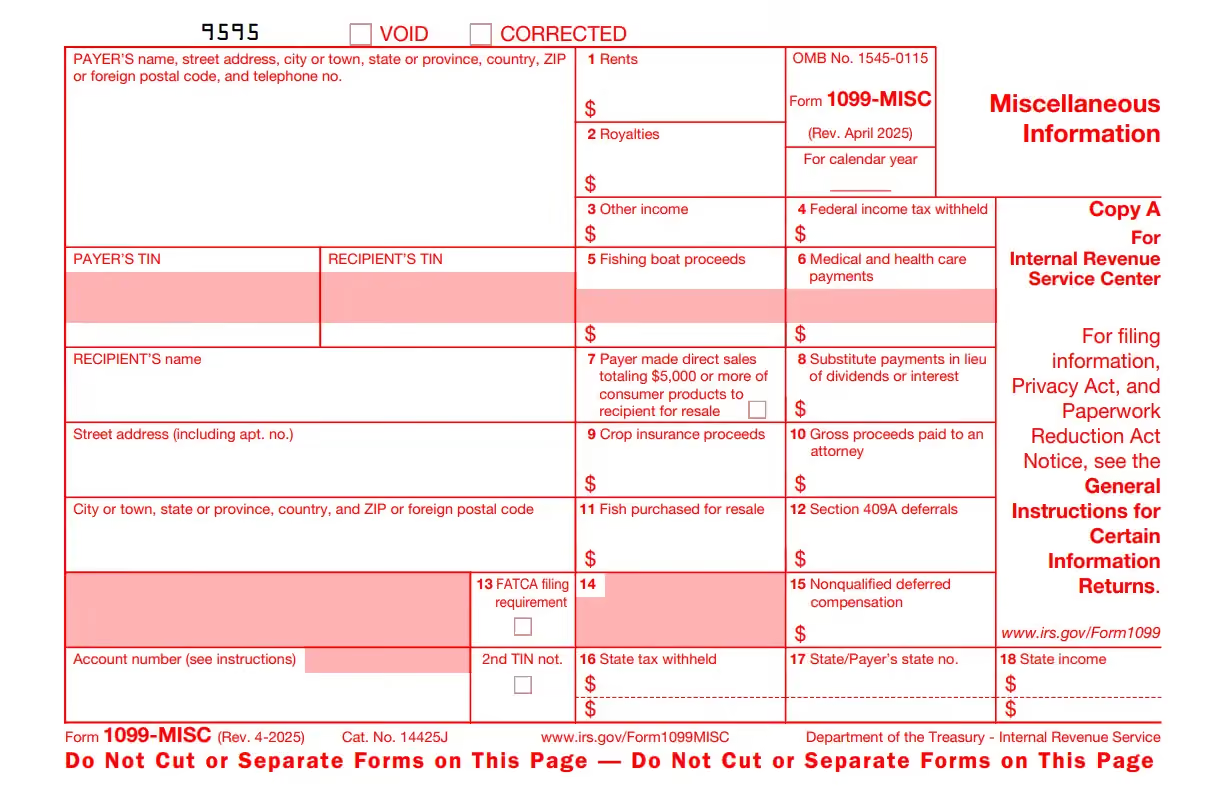
1099 reporting refers to the practice of providing the Internal Revenue Service (IRS) with information on various types of income other than wages, salaries, and tips. It’s primarily used to report payments made to independent contractors and other service providers, helping the IRS ensure these entities properly report all income.
Why is 1099 reporting important in the construction industry?
The construction industry relies heavily on independent contractors and subcontractors, making 1099 reporting vital. Proper reporting helps maintain transparency and accountability, ensuring that all parties comply with tax regulations. This is particularly important given the industry’s dynamic nature, in which projects often involve multiple contractors.
Who Needs to File 1099 in Construction?

For the 2025 tax year (filed in early 2026), any business that makes payments of $600 or more to an independent contractor or vendor during the year must file a Form 1099-NEC. Beginning with the 2026 tax year (filed in 2027), this threshold increases to $2,000 and will be indexed for inflation annually starting in 2027. This includes payments for services rendered, and the employer is responsible for filing. Both individuals and entities, such as partnerships and corporations in the construction industry, must be mindful of these filing requirements.
Impact on Business Operations
Failing to comply with 1099 reporting requirements can result in IRS penalties that may affect a company’s financial health and reputation. Accurate and timely filing is essential for compliance and maintaining good business relationships with contractors. Streamlined 1099 reporting processes lead to more effective business operations and resource management.
Understanding 1099s in Construction
In the construction industry, 1099 forms are used to report various types of income paid to nonemployees, such as independent contractors, subcontractors, and other service providers. Proper handling of 1099 forms ensures that all parties remain compliant with IRS regulations and helps avoid penalties.
Types of 1099 Forms Relevant to Construction
In Construction, there are two key types of 1099 forms you need to be aware of:
1099-NEC for Independent Contractors
The 1099-NEC form is primarily used to report payments to independent contractors. If you hire subcontractors or specialists—like plumbers, electricians, or carpenters—and pay them $600 or more during 2025 ($2,000 or more starting with 2026 payments), you’re required to file a 1099-NEC. This form details the payments made for services rendered without taxes withheld. Note that Box 3 on the 1099-NEC is now designated for excess golden parachute payments.
1099-MISC for Other Payments
The 1099-MISC form is used for other miscellaneous payments not covered under the 1099-NEC. It includes rents, prizes, awards, and other income forms such as attorney fees. Box 14, which previously reported golden parachute payments, is now reserved for future use. Although less common in typical construction transactions, understanding when the 1099-MISC might be necessary is important.
Difference between 1099 NEC and 1099 MISC
The main difference between the 1099-NEC and 1099-MISC is their intended use. The 1099-NEC is specifically for reporting nonemployee compensation, while the 1099-MISC covers a broader range of payments. Ensuring you use the correct form is critical to meet IRS filing requirements and avoid confusion.
1099 Reporting Requirements
Accurate 1099 reporting requires adherence to the IRS's specific filing requirements.
1099 reporting threshold for 2026
For payments made in 2025 (reported in early 2026), the payment threshold remains $600. This means that if you pay an independent contractor, vendor, or service provider $600 or more in 2025, you need to file the appropriate 1099 form.
For payments made in 2026 (reported in 2027), the threshold increases to $2,000. This represents a significant change that will reduce filing requirements for many construction businesses starting with their 2026 tax year. The threshold will be adjusted annually for inflation beginning in 2027.
1099 Reporting Deadlines for 2026
Filing deadlines are critical for 1099 reporting. Because January 31, 2026, falls on a Saturday, the deadline for most forms shifts to Monday, February 2, 2026.
For 1099-NEC (2025 tax year filed in 2026):
- To recipients: February 2, 2026
- To IRS (paper or electronic): February 2, 2026
For 1099-MISC (2025 tax year filed in 2026):
- To recipients: February 2, 2026
- To IRS (paper): March 2, 2026 (February 28 falls on Saturday)
- To IRS (electronic): March 31, 2026
Never miss a payroll or tax deadline! | Download 2026 Payroll Calendar
Filing Methods
When it comes to filing methods, businesses can choose between traditional paper filing and electronic filing. If you file 10 or more information returns in aggregate, you must e-file. Electronic filing is generally encouraged for its efficiency and ease of use, especially when dealing with multiple forms. Utilizing specialized tax software or hiring a professional can further streamline the filing process, ensuring accuracy and timely submission.
Construction Industry 1099 Reporting: Who’s Included?
Independent Contractors
In the construction industry, independent contractors encompass a wide range of roles and services. The IRS requires reporting for payments made to these individuals if they are not structured as corporations. Understanding who qualifies as an independent contractor is important for compliance.
- Subcontractors are individuals or businesses that take on specific tasks or sections of a larger project. They are often involved in electrical, plumbing, or carpentry work, and their payments must be documented.
- Specialized Trade Contractors: These are experts in a specific field, such as roofing, HVAC systems, or masonry work. As they provide specialized services, they typically operate independently and require 1099 reporting.
- Equipment Operators: While renting equipment doesn’t always require 1099 reporting, hiring an operator and equipment does. They provide expertise in handling heavy machinery on-site.
- Project Consultants: These professionals offer advisory services, project planning, or oversight and are often hired on a contractual basis.
Who is Exempt from 1099?
Certain exceptions exist within 1099 reporting requirements:
- Corporations: Generally, payments to corporations do not require a 1099 unless they involve legal or medical services.
- Materials-only Vendors: Vendors providing only materials without accompanying services typically do not require reporting.
- Special Cases: Specific exceptions may apply under IRS guidelines, exempting certain transactions from reporting obligations.
Common Reporting Situations in Construction
.avif)
Subcontractor Payments
One of the most common reporting scenarios involves payments to subcontractors for construction services. Accurately tracking these payments is necessary for proper 1099 reporting.
Equipment Rental with Operator
If the rental of equipment includes an operator, this transaction often falls within the service territory and requires reporting. Standalone equipment rentals without an operator do not typically fall under 1099 requirements.
Professional Services
Reporting is required for professional services such as legal, accounting, or architectural fees. These services are vital to projects and must be properly documented.
Mixed Services and Materials
When services are provided alongside materials—like installation work—it’s often necessary to distinguish and report the service portion separately under 1099 requirements.
Multiple Project Payments
When contractors work on multiple projects, it’s essential to track payments individually. Each project should be accounted for to avoid confusion and ensure accurate 1099 reporting.
Per-project vs. Annual Totals
The $600 threshold ($2,000 for 2026 payments) for 1099 reporting applies to the entire tax year, but maintaining records per project can simplify compliance and improve project cost tracking.
Collecting Required Information
Proper 1099 reporting in the construction industry begins with collecting essential information from contractors and vendors. This ensures accuracy and compliance with IRS requirements.
What documents do you need for a 1099?
.avif)
- W-9 Forms: Every contractor or vendor you work with should complete a W-9 form. This form provides you with their tax identification number (TIN) and legal business name, both critical for 1099 reporting.
- Tax Identification Numbers (TINs): Collecting the correct TIN, which could either be a Social Security Number (SSN) or an Employer Identification Number (EIN), is vital. It ensures that the IRS can correctly identify the taxpayer.
- Business Licenses: A copy of your contractors’ business licenses helps confirm that they are legitimate and operate as a valid business entity.
- Insurance Certificates: Collecting insurance certificates is important for liability purposes and helps verify that the contractor is in compliance with local and industry standards.
Verification Process
- Checking TIN Accuracy: It’s important to regularly verify TINs against IRS records to avoid mismatches, which can lead to penalties.
- Maintaining Records: Ensure that all documentation is kept up-to-date and filed securely. Maintaining records allows you to stay organized and makes future audits less challenging.
- Documentation Timing: Collect all necessary documentation before the end-of-year rush to avoid last-minute complications and ensure timely submission.
Common Reporting Mistakes
Even with all the necessary information, errors in reporting can occur. Being aware of common pitfalls can prevent costly mistakes.
Misclassifying Workers
One frequent mistake is misclassifying workers as independent contractors instead of employees. Misclassification can lead to serious penalties and back taxes. Ensure you understand the criteria distinguishing an independent contractor from an employee.
Missing Filing Deadlines
The deadline to submit 1099 forms is critical. For the 2025 tax year, forms are due February 2, 2026. Missing these deadlines can result in fines. Mark the due dates on your calendar as reminders, or use financial software with alerts.
Incorrect Payment Amounts
Reporting incorrect payment amounts is a common error. Always double-check payment records and transactions to ensure your reported amounts are accurate.
Incomplete Contractor Information
Ensure that all contractor information is complete. Missing or incorrect details, such as names or addresses, can result in rejected forms and further complications with the IRS.
Overlooking Reporting Requirements
Some businesses overlook their reporting obligations. Additional reporting requirements may apply depending on your state and specific business activities. Always stay informed of any changes in federal and state tax laws.
Best Practices for Compliance
Ensure compliance with 1099 reporting in the construction industry through these practices.
Setting up tracking systems
Establishing efficient tracking systems is essential for maintaining accurate records of contractor payments. Consider using specialized software or spreadsheets to monitor each transaction. This will make it easier to compile the necessary data for 1099 forms when tax season arrives.
Regular record maintenance
Consistently updating records throughout the year prevents last-minute scrambles. By regularly reconciling your records, you can catch discrepancies early and ensure that everything runs smoothly. Schedule monthly or quarterly reviews to keep your records accurate and up to date.
Digital documentation
Transitioning to digital documentation provides an organized and easily accessible trail of your transactions. Scan and store all invoices, receipts, and contracts electronically. Use cloud-based storage solutions that allow you to access your documents from anywhere while keeping them secure.
Internal review processes
Implement internal review processes to verify the accuracy and completeness of your 1099 reporting. Designate a team member or department to conduct periodic checks and balances. They can cross-verify records and ensure compliance with IRS regulations, reducing the risk of errors.
Year-end procedures
Conduct a review of all contractor payments at the end of each year. Prepare all necessary forms and double-check for accuracy. For the 2025 tax year, distribute 1099 forms to contractors by February 2, 2026 to avoid non-compliance penalties.
Technology Solutions
Leveraging technology can significantly improve the accuracy and efficiency of 1099 reporting in the construction industry.
Accounting software options
Consider utilizing accounting software that can track contractor payments and generate 1099 forms. Popular options such as QuickBooks and Xero offer built-in features to simplify the reporting process. These tools can help automate calculations and reduce the potential for human error.
Digital tracking tools
Digital tracking tools like spreadsheets or custom-built databases can offer a reliable solution for monitoring contractor payments. They allow detailed tracking of income and expenses, providing an overview at your fingertips.
Integration with payroll systems
Integrate your tracking and reporting systems with payroll solutions for seamless data flow. Payroll services that support 1099 filings can automatically sync with your records, ensuring consistent data across platforms. This integration minimizes manual entry and reduces the likelihood of reporting errors.
Penalties and Consequences for 2026
Navigating the 1099 reporting requirements in the construction industry is necessary to avoid penalties and legal troubles. Failing to comply with IRS regulations can lead to financial and reputational damage. Below are the updated penalty amounts for 2026:
Late Filing Penalties (2026 Amounts)
When a business fails to file its 1099 forms on time, the IRS imposes penalties that increase with time delays:
- Within 30 days after deadline: $60 per form
- 31 days to August 1: $130 per form
- After August 1 or not filing: $330 per form
- Maximum penalty for small businesses: $1,366,000 per year
These penalties apply regardless of whether you file paper or electronic forms. The IRS expects timely compliance, and delays can significantly impact small to mid-sized construction companies.
Incorrect Information Penalties
Submitting 1099 forms with incorrect information can also result in penalties. The IRS expects full accuracy regarding contractor details such as names, Tax Identification Numbers (TINs), and payment amounts. The penalty structure mirrors the late filing penalties, ranging from $60 to $330 per form, depending on how quickly the mistake is corrected. To avoid these penalties, double-check all information before submission.
Intentional Disregard Penalties
Failing to file 1099 forms entirely or intentionally disregarding filing requirements carries the most severe penalties. The minimum penalty is $660 per form with no maximum cap. The IRS does not take neglect lightly, and these fines accumulate quickly. Such financial burdens can be detrimental, especially when compliance lapses occur with multiple contractors or over successive years.
IRS Audit Triggers
Non-compliance with 1099 reporting can also increase the risk of an IRS audit. In the construction industry, where contractor payments are significant, incomplete or inaccurate reporting raises red flags. An audit scrutinizes past and current financials and can disrupt business operations. Ensuring accurate and timely submissions will help mitigate the risk of an audit maintaining smooth business workflows.
Summary
1099 reporting in the construction industry involves documenting payments made to contractors and subcontractors. It helps maintain transparency and ensure compliance with IRS regulations. Key points for 2026 include the February 2, 2026, filing deadline for the 2025 tax year, updated penalty amounts, and the upcoming threshold increase to $2,000 for payments made in 2026.
Importance of Accurate Reporting
Accurate reporting is necessary for avoiding penalties and maintaining good standing with tax authorities. It helps contractors verify income and provides clarity in financial records. Inaccurate reports can lead to audits, fines, and damage to professional relationships, underscoring the importance of careful documentation and timely submission of 1099 forms.
Next Steps for Compliance
To ensure compliance, businesses should:
- Maintain organized records of all payments made to contractors
- Regularly update contractor information to avoid errors
- Utilize accounting software or professional services to streamline the 1099 filing process
- Educate team members about 1099 reporting requirements to prevent oversight
- Prepare for the threshold increase to $2,000 starting with 2026 payments
- Mark February 2, 2026, on your calendar as the critical filing deadline for 2025 tax year forms
Construction companies can ensure they meet their tax obligations without complications by taking these steps.
Lorem ipsum dolor sit amet, consectetur adipiscing elit. Donec ullamcorper mattis lorem non. Ultrices praesent amet ipsum justo massa. Eu dolor aliquet risus gravida nunc at feugiat consequat purus. Non massa enim vitae duis mattis. Vel in ultricies vel fringilla.
Introduction
Mi tincidunt elit, id quisque ligula ac diam, amet. Vel etiam suspendisse morbi eleifend faucibus eget vestibulum felis. Dictum quis montes, sit sit. Tellus aliquam enim urna, etiam. Mauris posuere vulputate arcu amet, vitae nisi, tellus tincidunt. At feugiat sapien varius id.
Eget quis mi enim, leo lacinia pharetra, semper. Eget in volutpat mollis at volutpat lectus velit, sed auctor. Porttitor fames arcu quis fusce augue enim. Quis at habitant diam at. Suscipit tristique risus, at donec. In turpis vel et quam imperdiet. Ipsum molestie aliquet sodales id est ac volutpat.


Ipsum sit mattis nulla quam nulla. Gravida id gravida ac enim mauris id. Non pellentesque congue eget consectetur turpis. Sapien, dictum molestie sem tempor. Diam elit, orci, tincidunt aenean tempus. Quis velit eget ut tortor tellus. Sed vel, congue felis elit erat nam nibh orci.

Dolor enim eu tortor urna sed duis nulla. Aliquam vestibulum, nulla odio nisl vitae. In aliquet pellentesque aenean hac vestibulum turpis mi bibendum diam. Tempor integer aliquam in vitae malesuada fringilla.
Elit nisi in eleifend sed nisi. Pulvinar at orci, proin imperdiet commodo consectetur convallis risus. Sed condimentum enim dignissim adipiscing faucibus consequat, urna. Viverra purus et erat auctor aliquam. Risus, volutpat vulputate posuere purus sit congue convallis aliquet. Arcu id augue ut feugiat donec porttitor neque. Mauris, neque ultricies eu vestibulum, bibendum quam lorem id. Dolor lacus, eget nunc lectus in tellus, pharetra, porttitor.
Ipsum sit mattis nulla quam nulla. Gravida id gravida ac enim mauris id. Non pellentesque congue eget consectetur turpis. Sapien, dictum molestie sem tempor. Diam elit, orci, tincidunt aenean tempus. Quis velit eget ut tortor tellus. Sed vel, congue felis elit erat nam nibh orci.
Mi tincidunt elit, id quisque ligula ac diam, amet. Vel etiam suspendisse morbi eleifend faucibus eget vestibulum felis. Dictum quis montes, sit sit. Tellus aliquam enim urna, etiam. Mauris posuere vulputate arcu amet, vitae nisi, tellus tincidunt. At feugiat sapien varius id.
Eget quis mi enim, leo lacinia pharetra, semper. Eget in volutpat mollis at volutpat lectus velit, sed auctor. Porttitor fames arcu quis fusce augue enim. Quis at habitant diam at. Suscipit tristique risus, at donec. In turpis vel et quam imperdiet. Ipsum molestie aliquet sodales id est ac volutpat.
Mi tincidunt elit, id quisque ligula ac diam, amet. Vel etiam suspendisse morbi eleifend faucibus eget vestibulum felis. Dictum quis montes, sit sit. Tellus aliquam enim urna, etiam. Mauris posuere vulputate arcu amet, vitae nisi, tellus tincidunt. At feugiat sapien varius id.
Eget quis mi enim, leo lacinia pharetra, semper. Eget in volutpat mollis at volutpat lectus velit, sed auctor. Porttitor fames arcu quis fusce augue enim. Quis at habitant diam at. Suscipit tristique risus, at donec. In turpis vel et quam imperdiet. Ipsum molestie aliquet sodales id est ac volutpat.
- Lectus id duis vitae porttitor enim gravida morbi.
- Eu turpis posuere semper feugiat volutpat elit, ultrices suspendisse. Auctor vel in vitae placerat.
- Suspendisse maecenas ac donec scelerisque diam sed est duis purus.
Lectus leo massa amet posuere. Malesuada mattis non convallis quisque. Libero sit et imperdiet bibendum quisque dictum vestibulum in non. Pretium ultricies tempor non est diam. Enim ut enim amet amet integer cursus. Sit ac commodo pretium sed etiam turpis suspendisse at.
Tristique odio senectus nam posuere ornare leo metus, ultricies. Blandit duis ultricies vulputate morbi feugiat cras placerat elit. Aliquam tellus lorem sed ac. Montes, sed mattis pellentesque suscipit accumsan. Cursus viverra aenean magna risus elementum faucibus molestie pellentesque. Arcu ultricies sed mauris vestibulum.

Critical Construction Compliance | Awareness Week
Mar 16, 2026
Apr 15, 2026
Nov 30, 2026
Dec 15, 2026
Essential resources for contractors