AB 889 Changed the Rules on Fringe Benefits. Is Your Construction Payroll Ready?




California has increased prevailing wage compliance requirements, and the new rules are now in effect.
Assembly Bill 889 (AB 889), signed by Governor Newsom on October 11, 2025, and effective January 1, 2026, fundamentally changes how construction companies calculate and document fringe benefit credits on public works projects. This is not a minor paperwork update. AB 889 redefines how fringe benefits apply to prevailing wage obligations and eliminates exemptions that contractors previously used.
If your company works on California public works projects, the following outlines the key changes and required actions.
What Is AB 889?

AB 889 amends California Labor Code Section 1773.1 — the statute governing how employer payments toward fringe benefits are credited against prevailing wage obligations.
The law was introduced to address concerns about inconsistency and wage theft in the public works system. Over time, the Department of Industrial Relations (DIR) issued exemptions and rulings that allowed certain fringe contributions, such as apprenticeship training, defined contribution plans, and industry advancement funds, to bypass the standard annualization calculation. AB 889 eliminates these exemptions.
The result is stricter calculation requirements, enhanced documentation standards, and the removal of all exemptions.
The Core Mechanic: What Is Annualization?
Annualization is the method used to determine how much hourly credit a contractor can claim for fringe benefit contributions toward prevailing wage compliance.
The principle is borrowed from the federal Davis-Bacon Act and works like this:
Hourly Fringe Credit = Total Annual Fringe Contributions ÷ Total Hours Worked (Public + Private)
The key requirement is to use total hours worked, not just hours on public projects. Contractors cannot allocate fringe benefit contributions solely to prevailing wage jobs to increase the hourly credit. AB 889 codifies this rule in the California Labor Code, removing any ambiguity.
Here’s a simplified example of why it matters:
For example, if a contractor contributes $10,000 per year to an employee’s health plan and the employee works 1,000 hours (500 on public projects and 500 on private), the hourly credit is $10.00 per hour. If the contractor applied the credit only to the 500 public project hours, it would appear as $20.00 per hour. AB 889 prohibits this practice. All hours must be included in the calculation, ensuring accurate accounting.
What Specifically Changed Under AB 889

Three key shifts stand out:
1. All Prior DIR Exemptions Are Revoked
Before January 1, 2026, the DIR Director could exempt certain fringe contributions from the annualization requirement. Employers relied on these exemptions in good faith. Under AB 889, all such exemptions are revoked, regardless of their issuance date or duration of use. There is no grandfather clause.
2. The Burden of Proof Shifts to the Contractor
Previously, the state was responsible for proving a contractor’s calculation was incorrect. Now, contractors must proactively demonstrate that their calculations are accurate. If the Labor Commissioner requests documentation and it cannot be provided, the fringe credit may be denied, even if the contributions were made.
3. The DOL Field Operations Handbook Becomes the Default Reference
For prevailing wage fringe benefit credit issues not addressed by California statutes or regulations, the January 2023 version of the U.S. Department of Labor Field Operations Handbook is now the governing reference.
This provides enforcement teams with a consistent standard and limits the discretion that previously allowed for contractor-favorable interpretations.
The DIR Clarification on Journeyman Training
Shortly after AB 889 took effect, an important clarification was issued. Many payroll teams initially interpreted the law as requiring annualization for all fringe benefit types, including journeyman training contributions. The DIR has since stated that annualization is not required for journeyman training contributions.
This clarification provides significant relief for contractors, especially those managing apprenticeship programs or contributing to training trusts. Industry organizations, including the Associated General Contractors, have notified members of this update.
However, two important caveats apply. First, the statutory language of AB 889 still allows for interpretation. Second, the DIR’s current position may change with future regulatory guidance or enforcement decisions.
Contractors should document their chosen method and monitor DIR communications throughout 2026.
Documentation: What You Must Now Track
AB 889 has the most immediate operational impact on recordkeeping requirements, which have expanded substantially.
Per Employee, You Must Now Maintain:
- Total hours worked on public projects (by pay period and annually)
- Total hours worked on private projects (same)
- Dollar amount contributed to each fringe benefit plan or trust
- Contribution schedules showing how rates were applied
- Documentation showing how the hourly fringe credit was calculated
For Certified Payroll Reports:
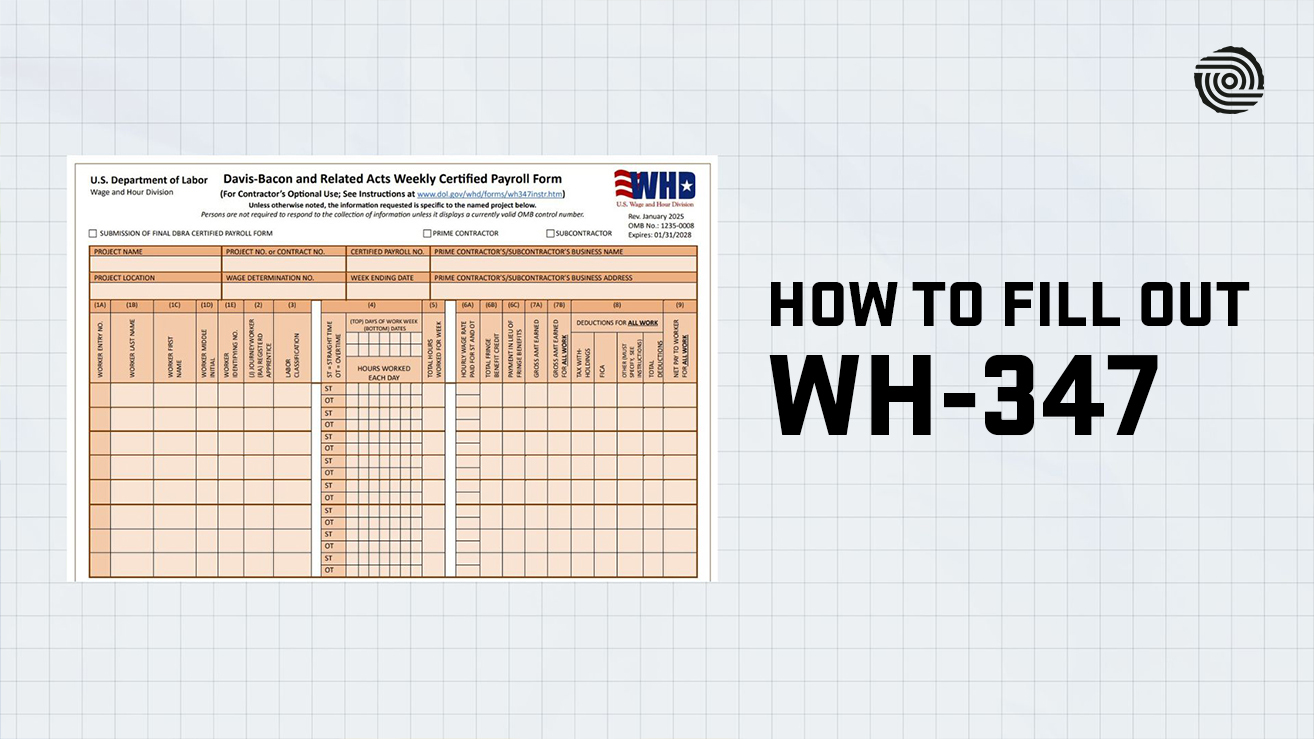
Reports must clearly indicate whether fringe benefits were paid in cash, contributed to a bona fide trust, or applied through another approved method. Vague or incomplete entries may result in credit denial.
For Defined Contribution Pension Plans:
Employer contributions to defined contribution pension plans must be documented annually. Incomplete annual records may result in the credit being disallowed during an audit, even if contributions were made.
The Division of Labor Standards Enforcement (DLSE) can request this documentation at any time, not only during a formal investigation. Payroll and HR teams must be prepared to provide it promptly.
What Happens If You Get It Wrong
Miscalculation or inadequate documentation can result in direct financial consequences.
If an audit by the Labor Commissioner finds that fringe credits were improperly claimed, the contractor may owe back wages to affected workers. Penalties for prevailing wage violations in California are among the highest in the country. Incomplete documentation can also trigger broader compliance reviews affecting other projects.
There is also a competitive bidding aspect. Annualization reduces the effective hourly credit a contractor can claim from fringe contributions, which increases the cash wage required on public jobs. Contractors who underestimate this impact may face margin compression during projects, while those who overestimate it may lose bids to competitors with more accurate systems.
Action Steps for Payroll Teams
If you haven’t already started, these five steps should happen immediately:
- Audit your current fringe benefit structure. Identify each benefit type you contribute to, such as health, pension, training, and industry advancement, and confirm that each is being annualized correctly across all hours.
- Review journeyman training credits specifically. Confirm how these are managed, document the selected method, and monitor DIR guidance for further clarification.
- Update your payroll software. The system must track public and private project hours separately for each employee and calculate annualized credits accurately.
- Train your payroll and HR teams. Teams must understand which documentation to collect, retain, and provide as required.
- Monitor DIR communications. As AB 889’s interpretation continues to evolve, establish a regular schedule to review updates from the DIR and relevant industry associations.
How Lumber Helps
Managing AB 889 compliance manually introduces significant risk. Lumber’s construction payroll platform is designed to address this level of complexity.
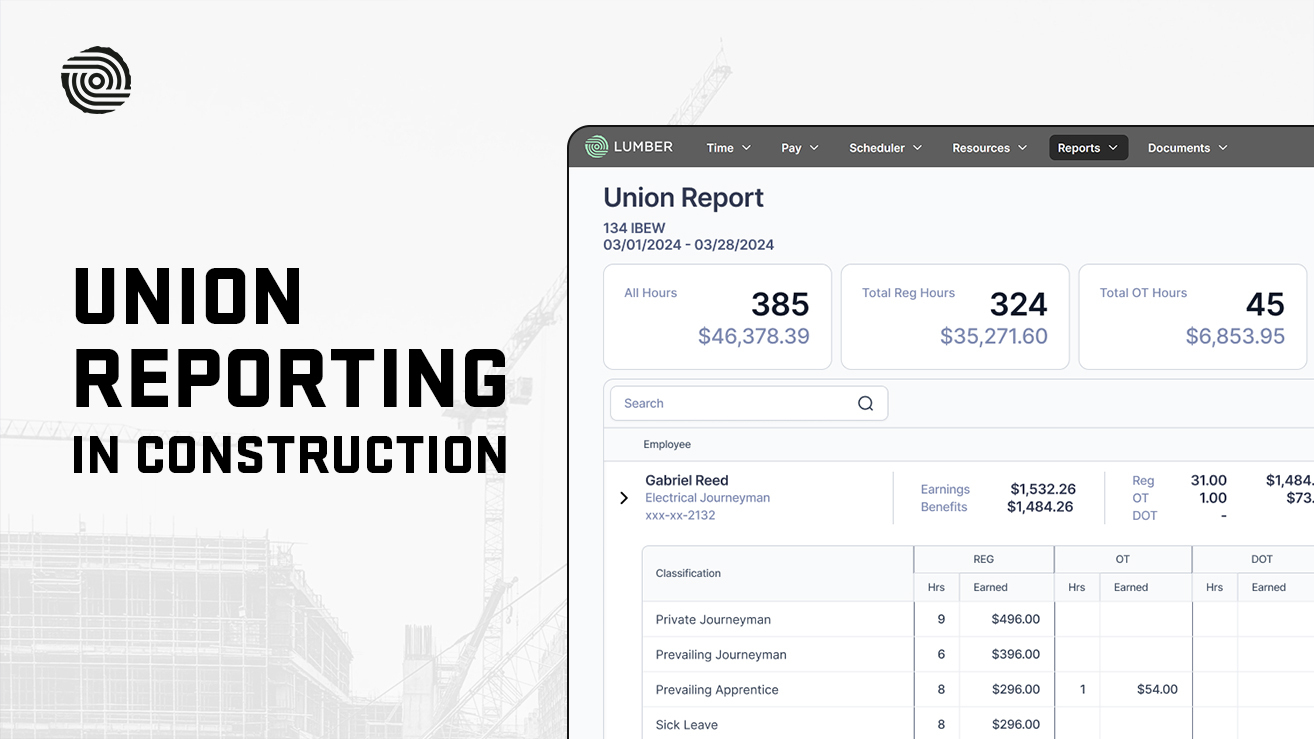
Lumber supports prevailing wage rate configuration at the project level, automated fringe calculation, and certified payroll reporting in WH-347 and state-specific formats. For contractors managing both union worker and non-union workers across public and private jobs, Lumber tracks hours, contributions, and pay rates with the separation and auditability required by AB 889.
The objective is clear: when the Labor Commissioner requests records, they should be organized, accurate, and complete.
Contact the Lumber team to discuss AB 889-ready payroll solutions.
Lorem ipsum dolor sit amet, consectetur adipiscing elit. Donec ullamcorper mattis lorem non. Ultrices praesent amet ipsum justo massa. Eu dolor aliquet risus gravida nunc at feugiat consequat purus. Non massa enim vitae duis mattis. Vel in ultricies vel fringilla.
Introduction
Mi tincidunt elit, id quisque ligula ac diam, amet. Vel etiam suspendisse morbi eleifend faucibus eget vestibulum felis. Dictum quis montes, sit sit. Tellus aliquam enim urna, etiam. Mauris posuere vulputate arcu amet, vitae nisi, tellus tincidunt. At feugiat sapien varius id.
Eget quis mi enim, leo lacinia pharetra, semper. Eget in volutpat mollis at volutpat lectus velit, sed auctor. Porttitor fames arcu quis fusce augue enim. Quis at habitant diam at. Suscipit tristique risus, at donec. In turpis vel et quam imperdiet. Ipsum molestie aliquet sodales id est ac volutpat.


Ipsum sit mattis nulla quam nulla. Gravida id gravida ac enim mauris id. Non pellentesque congue eget consectetur turpis. Sapien, dictum molestie sem tempor. Diam elit, orci, tincidunt aenean tempus. Quis velit eget ut tortor tellus. Sed vel, congue felis elit erat nam nibh orci.

Dolor enim eu tortor urna sed duis nulla. Aliquam vestibulum, nulla odio nisl vitae. In aliquet pellentesque aenean hac vestibulum turpis mi bibendum diam. Tempor integer aliquam in vitae malesuada fringilla.
Elit nisi in eleifend sed nisi. Pulvinar at orci, proin imperdiet commodo consectetur convallis risus. Sed condimentum enim dignissim adipiscing faucibus consequat, urna. Viverra purus et erat auctor aliquam. Risus, volutpat vulputate posuere purus sit congue convallis aliquet. Arcu id augue ut feugiat donec porttitor neque. Mauris, neque ultricies eu vestibulum, bibendum quam lorem id. Dolor lacus, eget nunc lectus in tellus, pharetra, porttitor.
Ipsum sit mattis nulla quam nulla. Gravida id gravida ac enim mauris id. Non pellentesque congue eget consectetur turpis. Sapien, dictum molestie sem tempor. Diam elit, orci, tincidunt aenean tempus. Quis velit eget ut tortor tellus. Sed vel, congue felis elit erat nam nibh orci.
Mi tincidunt elit, id quisque ligula ac diam, amet. Vel etiam suspendisse morbi eleifend faucibus eget vestibulum felis. Dictum quis montes, sit sit. Tellus aliquam enim urna, etiam. Mauris posuere vulputate arcu amet, vitae nisi, tellus tincidunt. At feugiat sapien varius id.
Eget quis mi enim, leo lacinia pharetra, semper. Eget in volutpat mollis at volutpat lectus velit, sed auctor. Porttitor fames arcu quis fusce augue enim. Quis at habitant diam at. Suscipit tristique risus, at donec. In turpis vel et quam imperdiet. Ipsum molestie aliquet sodales id est ac volutpat.
Mi tincidunt elit, id quisque ligula ac diam, amet. Vel etiam suspendisse morbi eleifend faucibus eget vestibulum felis. Dictum quis montes, sit sit. Tellus aliquam enim urna, etiam. Mauris posuere vulputate arcu amet, vitae nisi, tellus tincidunt. At feugiat sapien varius id.
Eget quis mi enim, leo lacinia pharetra, semper. Eget in volutpat mollis at volutpat lectus velit, sed auctor. Porttitor fames arcu quis fusce augue enim. Quis at habitant diam at. Suscipit tristique risus, at donec. In turpis vel et quam imperdiet. Ipsum molestie aliquet sodales id est ac volutpat.
- Lectus id duis vitae porttitor enim gravida morbi.
- Eu turpis posuere semper feugiat volutpat elit, ultrices suspendisse. Auctor vel in vitae placerat.
- Suspendisse maecenas ac donec scelerisque diam sed est duis purus.
Lectus leo massa amet posuere. Malesuada mattis non convallis quisque. Libero sit et imperdiet bibendum quisque dictum vestibulum in non. Pretium ultricies tempor non est diam. Enim ut enim amet amet integer cursus. Sit ac commodo pretium sed etiam turpis suspendisse at.
Tristique odio senectus nam posuere ornare leo metus, ultricies. Blandit duis ultricies vulputate morbi feugiat cras placerat elit. Aliquam tellus lorem sed ac. Montes, sed mattis pellentesque suscipit accumsan. Cursus viverra aenean magna risus elementum faucibus molestie pellentesque. Arcu ultricies sed mauris vestibulum.

Critical Construction Compliance | Awareness Week
Mar 16, 2026
Apr 15, 2026
Nov 30, 2026
Dec 15, 2026
Essential resources for contractors