The OSHA Rules Most Fence Contractors Don’t Know They’re Breaking




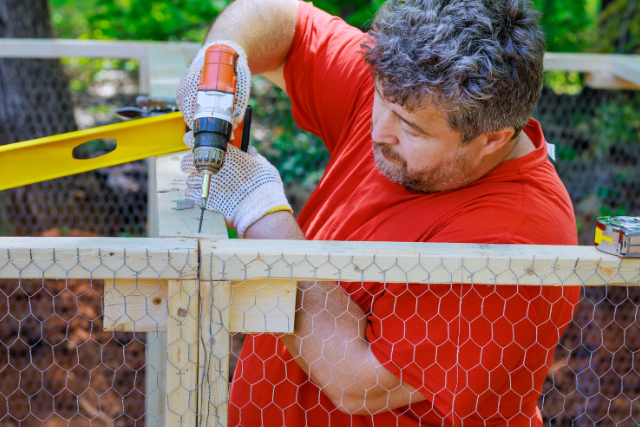
A three-person crew sets a string line, fires up the auger, and starts drilling post holes across a commercial property line eight feet from a loading dock edge. Nobody flags the hole depth. Nobody flags the edge. It looks like an ordinary Tuesday.
It’s also exactly how a fencing job ends up with an OSHA citation.
Quick Answer: OSHA has no single standard written for fence contractors. Violations come through overlapping construction rules covering fall protection, excavation, PPE, and the General Duty Clause. Most fence crews get cited for hazards they never realized applied to their work, because nothing in the rulebook says “fencing” specifically.
OSHA has no standard for Fence Contractors. That's the Problem.
There's no dedicated fencing standard, inspectors pull from whatever construction rules the actual hazards trigger.
A crew can be cited under fall protection, excavation, PPE, and recordkeeping on a single visit without ever breaking a rule that names fencing by number.
That gap is where OSHA construction safety exposure hides for fencing crews: the rules apply, but nobody wrote them with a post-hole digger in mind.
The OSHA Standards That Actually Apply to Fence Crews
Fall Protection — 29 CFR 1926.501–503
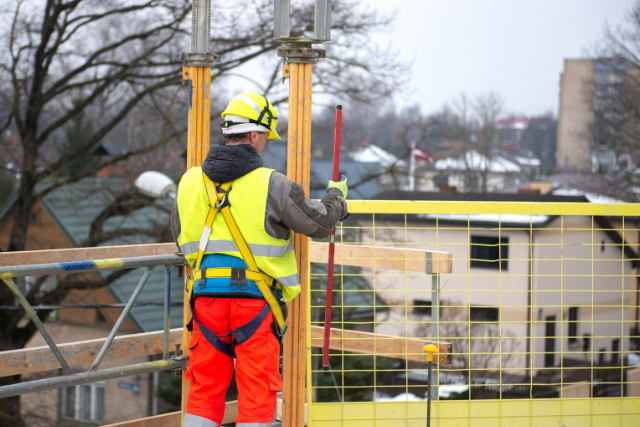
The duty to have fall protection comes from 1926.501(b)(1): guardrails, safety nets, or a personal fall arrest system are required whenever a worker is exposed to an unprotected edge six feet or more above a lower level. 1926.502 sets the criteria for those systems, including anchor points. 1926.503 covers training.
Fall protection under 29 CFR 1926 for fencing work applies to elevated terrain, retaining walls, embankments, loading dock edges, and rooftop security fencing, not just roofing and steel. Fall Protection has been OSHA's most frequently cited standard for 15 straight fiscal years, with 5,914 citations in FY2025 alone.
One detail crews miss: the fence under construction doesn't count as fall protection for the people building it. OSHA has stated in a standard interpretation that a lightweight barrier, like snow fencing set back from an edge, doesn't satisfy guardrail criteria.
The crew needs its own evaluated protection method while the work is underway.
Excavation and Trenching — 29 CFR 1926.651 and .652
Post holes deeper than five feet can trigger excavation compliance, including a competent person's evaluation and, where warranted, a protective system. Most fence crews don't think of a post hole as an "excavation," but OSHA's rule isn't limited by width.
For holes under five feet, no protective system is required if a competent person examines the ground and finds no cave-in risk. Most residential post holes never approach this threshold; it matters more for deeper commercial and security-fencing footings.
Separately, 1926.651(b) requires locating underground utilities before opening any excavation, regardless of depth. That applies to every post hole, not just deep ones.
Head Protection — 29 CFR 1926.100
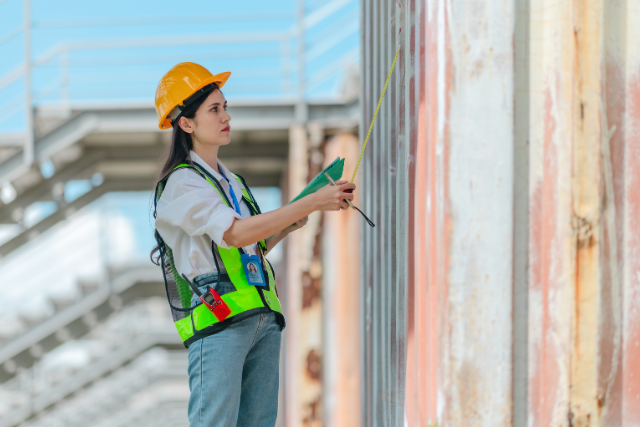
Required on active construction sites. Fence crews working alongside other trades on a shared jobsite get cited when they skip hard hats on what looks like a simple open-field install.
The General Duty Clause — Section 5(a)(1)
OSHA's catch-all for recognized hazards with no specific standard. It requires employers to furnish a workplace free of hazards likely to cause death or serious physical harm, and OSHA uses it for heat illness, unguarded augers, and entanglement risk.
If a hazard is known and preventable, the General Duty Clause can cover it even without a corresponding numbered standard.
Augers and Post Drivers: The Equipment Hazards Fence Crews Underestimate
Auger entanglement is one of the most common fence crew injuries, on both towable and skid-steer units. OSHA's power tool standard, 1926.300, requires equipment to keep the guards it was designed with and to guard exposed moving parts that create a hazard. PPE requirements for eye, hand, and hearing protection sit under Subpart E.
Common gaps on the job include missing or bypassed auger guards, PPE that doesn't match the tool in use, and workers running equipment without training specific to its hazards. Employers are required to provide training on the equipment and conditions a worker will actually encounter, including how to recognize unsafe conditions, not just a one-time general safety talk.
Lockout/tagout applies whenever a crew services equipment on the job, not just in a shop.
You Called 811. That's Not Enough.
Calling 811 reduces risk. It doesn't eliminate OSHA exposure.
811 requests a utility locate. It doesn't create the documentation OSHA looks for. Under 1926.651(b), the employer must determine the estimated location of underground utilities before opening an excavation and contact utility owners within customary local response times. If a strike happens and no record shows the locate was requested, timed, and confirmed before digging, the General Duty Clause applies immediately, and the 811 call alone won't cover it.
State and local damage-prevention laws set specific notice periods and exemptions, so confirm the rules in every state a crew works in, rather than assuming one process nationwide.
Heat Illness Is Now an OSHA Priority. Is Your Crew Ready?
There is still no final federal heat standard. OSHA's proposed rule, "Heat Injury and Illness Prevention in Outdoor and Indoor Work Settings," has been stalled in rulemaking since 2024, and the Department of Labor's own regulatory agenda gives no reliable near-term date for a final rule.
Enforcement didn't wait for it. In April 2026, OSHA issued an updated National Emphasis Program on heat (CPL 03-00-024), running through 2031 and covering 55 high-hazard industries. Outdoor fencing crews sit squarely inside that enforcement focus, not just in Sun Belt states.
Without a final standard, OSHA cites heat hazards under the General Duty Clause, and compliance officers assess whether an employer has an effective heat illness prevention program: water, rest breaks, shade or cooling access, training, and a way to monitor heat conditions.
A contractor doesn't need to wait for a final rule to have that documentation ready. Waiting for the rule and having nothing to show an inspector today are two different risks.
The Recordkeeping Violations That Catch Fence Contractors Off Guard
The OSHA 300 Log: Who Has to Keep It and What Goes In
Employers with more than 10 employees generally must maintain the OSHA 300 Log of work-related injuries and illnesses, along with Forms 300A and 301, unless a size or low-hazard industry exemption applies. Recordable cases include anything involving medical treatment beyond first aid, plus all work-related fatalities. Post the
Form 300A summary, without employee names, from February 1 through April 30 each year. Keep records for five years. Many small fence contractors don't realize they're covered until an inspector asks for the log and it doesn't exist.
Fatality and Hospitalization Reporting: The Deadlines Most Contractors Don't Know
A fatality must be reported to OSHA within 8 hours. An inpatient hospitalization, amputation, or loss of an eye must be reported within 24 hours. Missing either deadline is a separate, standalone violation on top of whatever caused the incident.
What an OSHA Inspection on a Fence Job Actually Looks Like
Inspections aren't random. OSHA prioritizes them: imminent danger situations first, then fatalities or catastrophes (a hospitalization of three or more workers), then employee complaints and referrals, then programmed inspections targeting high-hazard industries, then follow-ups on prior citations.
When a compliance officer shows up, expect an opening conference explaining the reason for the visit and its scope, a walkaround of the site itself, document review (training records, the 300 Log, locate confirmations), and a closing conference covering what was found. Crews should know who the designated site contact is before an inspector ever arrives, so nobody improvises an answer to a question they weren't prepared for.
How to Build a Compliance Paper Trail Before an Inspector Shows Up
A workable checklist, without a dedicated safety department:
- Request utility locates and document the estimated location of underground installations before any digging.
- Have a competent person evaluate hole depth and soil conditions on jobs approaching five feet.
- Identify unprotected edges and apply an evaluated fall protection method before starting work.
- Confirm auger, post driver, and tensioner guards are intact, and PPE matches the tool.
- Keep a daily site log signed by the crew lead.
- Maintain OSHA 300 Log entries unless the company qualifies for an exemption.
The hard part usually isn't doing the work. It's having a place to keep the record so it's ready the day someone asks for it.
Frequently Asked Questions
Does OSHA have a specific standard for fence contractors?No. OSHA has no dedicated rule for fencing. Violations come through general construction standards, most often fall protection, excavation, PPE, and the General Duty Clause, applied to whatever hazard actually exists on the job.
When does a post hole become an excavation under OSHA?Under 1926.652, holes an employee enters generally need cave-in protection unless a competent person finds no risk, which applies without a protective system for depths under five feet. Whether protection is required for a hole nobody enters depends on whether entry is reasonably foreseeable, not depth alone.
What is the General Duty Clause and how has OSHA used it against fencing contractors?Section 5(a)(1) of the OSH Act requires a workplace free of recognized hazards likely to cause death or serious harm, used where no specific standard applies. For fencing, that includes heat illness, unguarded augers, and undocumented utility strikes.
What documentation should I keep on every fence job for OSHA compliance?Daily safety logs, toolbox talk sign-offs, PPE acknowledgments, fall protection pre-task plans, and utility locate confirmations, at minimum. Add OSHA 300 Log entries if the company isn't exempt.
How quickly do I need to report a worker fatality or hospitalization to OSHA?A fatality within 8 hours. An inpatient hospitalization, amputation, or loss of an eye within 24 hours. Both are separate reporting obligations from any underlying citation.
Final Thoughts
Fencing carries real OSHA exposure most crews underestimate, precisely because nothing in the rulebook uses the word "fencing." Post holes can trigger excavation rules. Edges trigger fall protection. Heat and equipment hazards fall to the General Duty Clause. None of it requires a large safety department. It requires the right person checking the right hazard, and a simple, consistent way to prove it happened.
For contractors already tracking job costing, certified payroll, and crews across multiple states, safety documentation is one more piece of the same operational puzzle, not a separate system to maintain. Lumber's construction workforce platform keeps training records, safety forms, and job classifications organized in one place, so pulling documentation together doesn't mean digging through someone's truck for a clipboard.
Lorem ipsum dolor sit amet, consectetur adipiscing elit. Donec ullamcorper mattis lorem non. Ultrices praesent amet ipsum justo massa. Eu dolor aliquet risus gravida nunc at feugiat consequat purus. Non massa enim vitae duis mattis. Vel in ultricies vel fringilla.
Introduction
Mi tincidunt elit, id quisque ligula ac diam, amet. Vel etiam suspendisse morbi eleifend faucibus eget vestibulum felis. Dictum quis montes, sit sit. Tellus aliquam enim urna, etiam. Mauris posuere vulputate arcu amet, vitae nisi, tellus tincidunt. At feugiat sapien varius id.
Eget quis mi enim, leo lacinia pharetra, semper. Eget in volutpat mollis at volutpat lectus velit, sed auctor. Porttitor fames arcu quis fusce augue enim. Quis at habitant diam at. Suscipit tristique risus, at donec. In turpis vel et quam imperdiet. Ipsum molestie aliquet sodales id est ac volutpat.


Ipsum sit mattis nulla quam nulla. Gravida id gravida ac enim mauris id. Non pellentesque congue eget consectetur turpis. Sapien, dictum molestie sem tempor. Diam elit, orci, tincidunt aenean tempus. Quis velit eget ut tortor tellus. Sed vel, congue felis elit erat nam nibh orci.

Dolor enim eu tortor urna sed duis nulla. Aliquam vestibulum, nulla odio nisl vitae. In aliquet pellentesque aenean hac vestibulum turpis mi bibendum diam. Tempor integer aliquam in vitae malesuada fringilla.
Elit nisi in eleifend sed nisi. Pulvinar at orci, proin imperdiet commodo consectetur convallis risus. Sed condimentum enim dignissim adipiscing faucibus consequat, urna. Viverra purus et erat auctor aliquam. Risus, volutpat vulputate posuere purus sit congue convallis aliquet. Arcu id augue ut feugiat donec porttitor neque. Mauris, neque ultricies eu vestibulum, bibendum quam lorem id. Dolor lacus, eget nunc lectus in tellus, pharetra, porttitor.
Ipsum sit mattis nulla quam nulla. Gravida id gravida ac enim mauris id. Non pellentesque congue eget consectetur turpis. Sapien, dictum molestie sem tempor. Diam elit, orci, tincidunt aenean tempus. Quis velit eget ut tortor tellus. Sed vel, congue felis elit erat nam nibh orci.
Mi tincidunt elit, id quisque ligula ac diam, amet. Vel etiam suspendisse morbi eleifend faucibus eget vestibulum felis. Dictum quis montes, sit sit. Tellus aliquam enim urna, etiam. Mauris posuere vulputate arcu amet, vitae nisi, tellus tincidunt. At feugiat sapien varius id.
Eget quis mi enim, leo lacinia pharetra, semper. Eget in volutpat mollis at volutpat lectus velit, sed auctor. Porttitor fames arcu quis fusce augue enim. Quis at habitant diam at. Suscipit tristique risus, at donec. In turpis vel et quam imperdiet. Ipsum molestie aliquet sodales id est ac volutpat.
Mi tincidunt elit, id quisque ligula ac diam, amet. Vel etiam suspendisse morbi eleifend faucibus eget vestibulum felis. Dictum quis montes, sit sit. Tellus aliquam enim urna, etiam. Mauris posuere vulputate arcu amet, vitae nisi, tellus tincidunt. At feugiat sapien varius id.
Eget quis mi enim, leo lacinia pharetra, semper. Eget in volutpat mollis at volutpat lectus velit, sed auctor. Porttitor fames arcu quis fusce augue enim. Quis at habitant diam at. Suscipit tristique risus, at donec. In turpis vel et quam imperdiet. Ipsum molestie aliquet sodales id est ac volutpat.
- Lectus id duis vitae porttitor enim gravida morbi.
- Eu turpis posuere semper feugiat volutpat elit, ultrices suspendisse. Auctor vel in vitae placerat.
- Suspendisse maecenas ac donec scelerisque diam sed est duis purus.
Lectus leo massa amet posuere. Malesuada mattis non convallis quisque. Libero sit et imperdiet bibendum quisque dictum vestibulum in non. Pretium ultricies tempor non est diam. Enim ut enim amet amet integer cursus. Sit ac commodo pretium sed etiam turpis suspendisse at.
Tristique odio senectus nam posuere ornare leo metus, ultricies. Blandit duis ultricies vulputate morbi feugiat cras placerat elit. Aliquam tellus lorem sed ac. Montes, sed mattis pellentesque suscipit accumsan. Cursus viverra aenean magna risus elementum faucibus molestie pellentesque. Arcu ultricies sed mauris vestibulum.

Critical Construction Compliance | Awareness Week
Mar 16, 2026
Apr 15, 2026
Nov 30, 2026
Dec 15, 2026
Essential resources for contractors