Scaling Crews for Data Center Builds Without Breaking Payroll

.jpg)


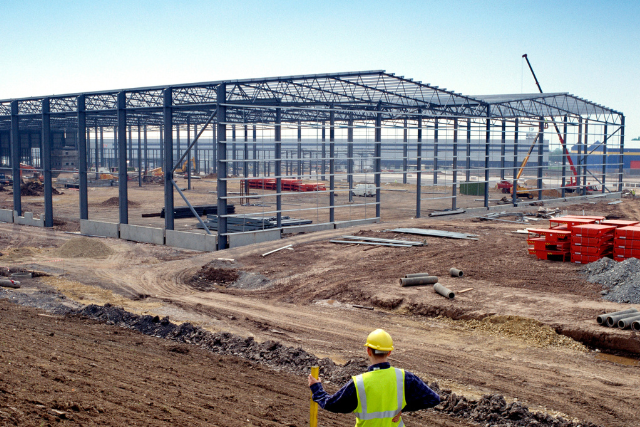
You won the bid.
The project is a 350,000-square-foot hyperscale data center in northern Virginia. Electrical, mechanical, and structural scope. Prevailing wage. IBEW Local in the mix. Mobilization in six weeks. The owner’s project manager has already made clear that certified payroll submissions need to be on time, every week, from day one—because they’ve been through an audit before and they’re not doing it again.
Congratulations. Now comes the part no one talks about at the pre-bid meeting.
The Operational Reality of a Data Center Build
Data center construction isn’t complicated because of the technology inside. It’s complicated because of the workforce required to build it—and the operational machinery needed to manage that workforce effectively at scale.
Think through what a mid-size data center project actually requires from a payroll and HR standpoint.
You’re onboarding 80 to 150 workers, potentially from multiple locals and multiple trades. Each worker carries a different classification. Different workers apply to different wage determinations. Some are unionized, covered under a CBA that specifies exact fringe benefit contributions, deduction structures, and overtime rules. Some are direct hire. Some arrive through a labor broker. A few are subcontractor labor you need to track for certified payroll purposes, even though you’re not cutting their checks directly.
Week one, you need timesheets to flow accurately. Week two, you need your first certified payroll submission ready—correctly formatted, correctly calculated, no amendments required. Your project owner has a compliance team that reviews every submission. They will find errors. They will call you.
By week four, you’re at full crew. By week six, you’re managing overtime, crew rotations, and second-shift differentials. Some workers have hit their health and welfare contribution thresholds. Fringe rates need to be adjusted. Your payroll team is running hard every Thursday and Friday.
By month three, you have two more projects starting. Different states. Different wage determinations. New CBAs you’ve never run before.
This is what data center work looks like. This is normal. And without the right systems behind it, it breaks.
Where Payroll Actually Goes Wrong

We’ve talked to contractors who’ve done this work. The failure modes are consistent.
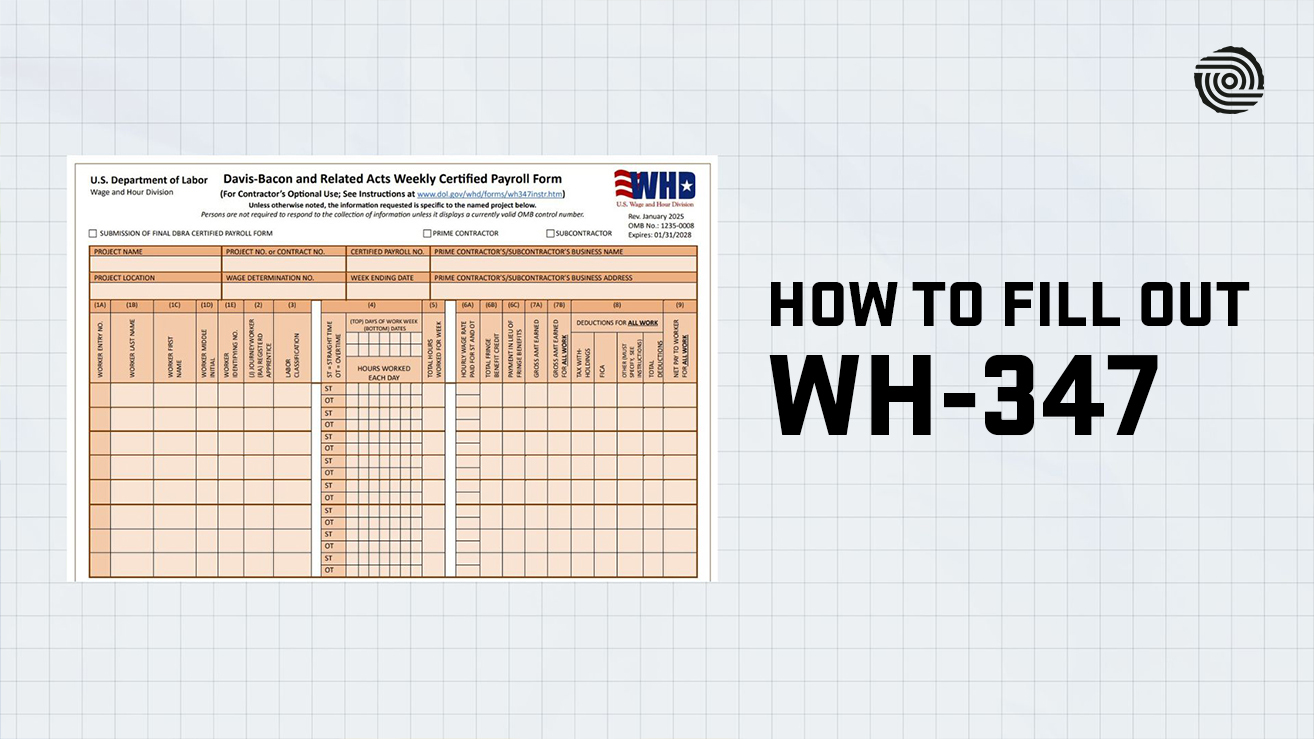
Worker classification errors. One worker gets clocked under the wrong trade category for three weeks. The prevailing wage rate applied was the rate for that category, not the correct one. You catch it on week four, trigger a correction, and now your WH-347 submissions for weeks one through three need to be amended. Your project owner’s compliance team flags the amendment. They ask questions. Your superintendent gets pulled off the floor for a documentation review. The problem started small. The cost in time and credibility is not small.
Fringe benefit miscalculations. CBAs are dense documents, and when their terms are entered manually into a payroll system that wasn’t designed for construction, fringe calculations drift. Health and welfare contributions are applied at slightly incorrect rates. Pension contributions are off. Vacation accruals don’t reflect the correct language in the agreement. You don’t find out until a union rep files a grievance or a payroll audit surfaces the discrepancy. By then, the liability has been accumulating for months.
Certified payroll submission delays. Your general contractor requires weekly certified payroll. Your back office is manually pulling timesheet data, cross-referencing it with wage determinations, and assembling WH-347s in a spreadsheet. On a good week, that process takes a day and a half. When someone is out sick or the timesheets come in late, it takes three days. You’re chronically behind. The GC is sending emails. The owner’s compliance team is sending emails. Your project manager is fielding calls about something that should be invisible.
Onboarding bottlenecks that stall mobilization. New hire paperwork is moving through inboxes. A worker shows up on site and isn’t in the system. They can’t clock in cleanly. Time gets manually noted by the foreman, reconciled later against a paper log, and entered by someone in the office at the end of the week. The data is late, partially inaccurate, and unusable for real-time job costing. Multiply that by 20 workers in the first two weeks of a large mobilization.
No visibility across projects. You’re running this project and two others simultaneously. Your CFO wants a labor cost report across all three. Someone pulls data from three different payroll runs, consolidates it in Excel, formats it, and presents a number that’s already 10 days old. Decisions about crew allocation and margin recovery get made on stale information.
None of these is a catastrophic failure in isolation. Together, over the course of a 14-month data center project with a 2% margin, they’re how you finish in the red on a job you should have made money on.
The Specific Demands of Data Center Payroll

It’s worth being specific about what makes data center payroll harder than a typical commercial project, because the complexity is real and it’s worth understanding before you’re in the middle of it.
Prevailing wage on federally influenced projects. As the White House’s AI Action Plan opens federal lands for data center construction and accelerates federally assisted infrastructure, a growing share of data center projects will carry Davis-Bacon requirements. That means jurisdiction-specific wage determinations, worker classification accuracy that has to be airtight, and certified payroll every week without exception. Getting this wrong isn’t just a financial liability. On a federally assisted project, it’s a debarment risk.
Multiple CBAs on a single project. A large data center build typically involves several trades—electrical, mechanical, structural, plumbing, fire suppression. Each may be covered by a different collective bargaining agreement, potentially from a different local. Each CBA has its own fringe schedule, its own overtime rules, and its own apprentice-to-journeyman ratio requirements. Running all of them simultaneously, correctly, in a single payroll system requires a platform built for this (not one retrofitted for it).
Scale and speed of crew changes. Data center projects ramp fast and ramp down fast. You might go from 60 workers to 200 workers in six weeks as a major phase starts. Then the crew count drops as that phase wraps. Onboarding, classification, credential tracking, and offboarding all have to function correctly at varying volumes without the process speed varying with team size. A manual process that works with 60 workers doesn’t work at 200.
Power density and shift complexity. Data centers often run construction on multiple shifts to compress the schedule. Second-shift differentials, overnight premiums, and shift overlap management must be accurately reflected in payroll. When you’re running two shifts across a crew of 180 people, the number of pay variations per week is significant. Manual processing at that level is both slow and error-prone.
How Lumber Is Built for This
Lumber’s platform covers the full end-to-end workflow of a data center build from the first onboarding form to the final certified payroll submission. Here’s what that looks like in practice.
Onboarding that doesn’t slow mobilization. New workers complete onboarding digitally before their first day. They’re classified correctly, credentials are tracked, and they’re in the system and ready to clock in from day one. No paper forms in an inbox. No gap between when a worker arrives on site and when they exist in your payroll system.
The prevailing wage runs automatically. Lumber’s compliance engine automatically applies the correct wage determination to each worker, by classification and jurisdiction. When a new wage determination is issued mid-project, it updates in the system (and not in a spreadsheet that someone has to remember to change). Certified payroll is generated automatically. WH-347 submissions are ready weekly, with no manual reconciliation required.
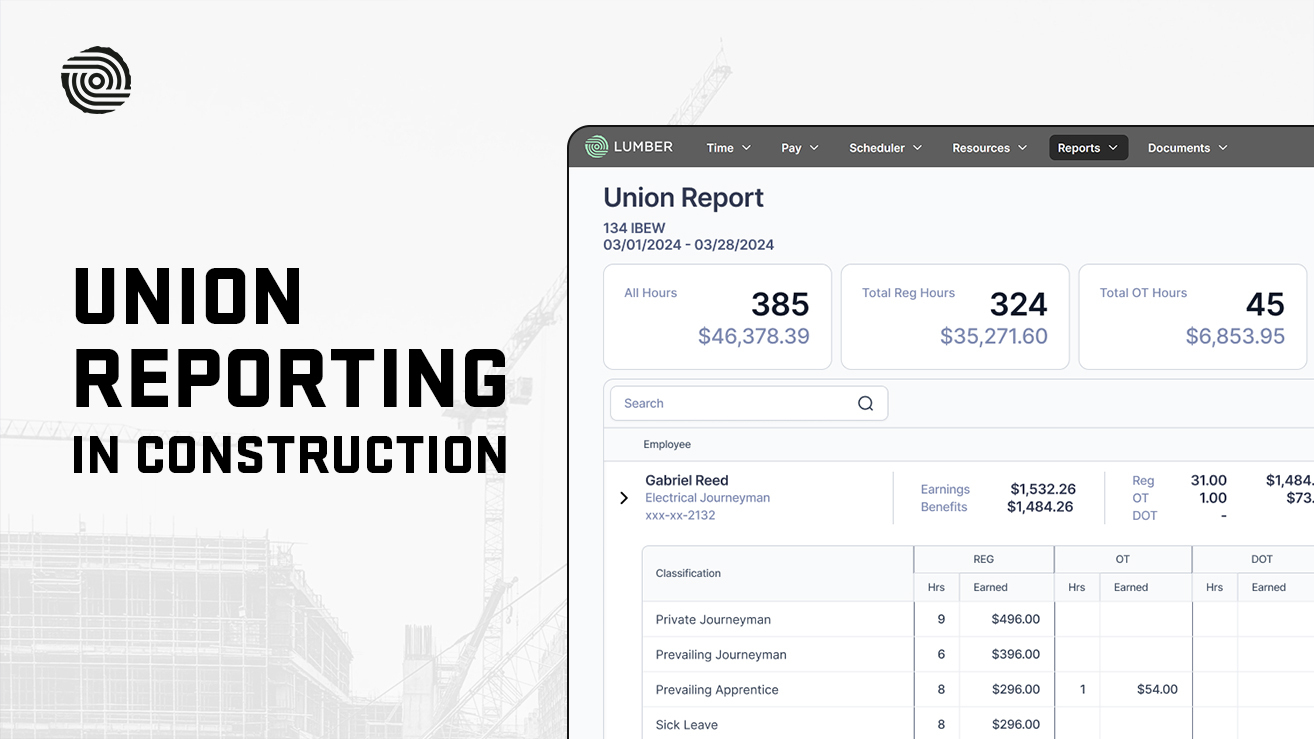
Union payroll with CBA accuracy. Lumber’s Union Agent AI ingests CBAs and configures fringe contributions, deductions, and pay rules directly into payroll. Multiple locals on one project, multiple CBAs across your portfolio, all this and more will be handled by Lumber's AI engine. Fringe calculations are applied at the correct rates to the correct workers, without guesswork. When a CBA renews, or rates change mid-project, the update flows through the system without requiring a manual reconfiguration.
Time tracking built for the field. Crews clock in from the jobsite via the mobile app, a paper timecard photo, or an on-site kiosk (whatever works for the project environment). Lumber’s Paper Timecard Agent converts handwritten timecards to digital records. Time data flows directly to payroll. No manual entry. No reconciliation step between what the foreman recorded and what the payroll team processes.
Real-time job costing across every project. Labor costs update in real time against cost codes. When your CFO asks how you’re tracking on labor for the Virginia project versus the Texas project, the answer is ready now and not two days from now. When your superintendent needs to know whether a trade is over budget, the data is up to date.
LumberCare when the stakes are highest. Our managed services team comprises of real CPAs and prevailing wage specialists are available for the complex situations that need a human expert. A new wage determination mid-project. An audit notice. A CBA interpretation question that’s genuinely unclear. A fringe benefit dispute with a local. You’re not on your own with it.
What Scaling Actually Looks Like with Lumber
Week one: Crews are onboarded and clocking in from day one. Every worker is correctly classified. Prevailing wage rates are applied automatically.
Week two: First certified payroll submission goes out on time, generated by the system. Your project owner’s compliance team has nothing to flag.
Month two: You’re at full crew. Over time, shift differentials and second-shift premiums are calculated automatically. Your payroll team isn’t working weekends to stay current.
Month four: Your project owner requests a labor compliance audit. You export everything they need in an afternoon. No scramble. No amendments. No uncomfortable phone calls.
Month six: Two more projects start in different states. The same compliance engine handles the new wage determinations and new CBAs. Your back office workload doesn’t double.
Project close: Final certified payroll submissions are complete and accurate. Your compliance record is clean. You’re bidding on the next one.
That’s what scaling crews for data center builds looks like when payroll doesn’t break.
The Data Center Decade Is Here
The federal policy is in place. The capital is committed. The AI Action Plan has placed the federal government's weight behind accelerating this construction. The projects are coming—and they’re coming faster than most contractors’ operational infrastructure is ready for.
The specialty contractors who position themselves to handle the compliance, scale, and speed demands of data center builds will build a real competitive advantage. They’ll win more work because they can credibly execute. They’ll retain better workers because they pay right and onboard fast. They’ll protect their margins because compliance errors won’t eat into them from week three onward.
If you’re already bidding on data center work, or you’re planning to go after it, the question worth asking is whether your back office is ready to keep up with your field operations.
Lumber is built for exactly that moment.
Book a 15-minute call to see how Lumber handles prevailing wage and certified payroll for data center builds
Lorem ipsum dolor sit amet, consectetur adipiscing elit. Donec ullamcorper mattis lorem non. Ultrices praesent amet ipsum justo massa. Eu dolor aliquet risus gravida nunc at feugiat consequat purus. Non massa enim vitae duis mattis. Vel in ultricies vel fringilla.
Introduction
Mi tincidunt elit, id quisque ligula ac diam, amet. Vel etiam suspendisse morbi eleifend faucibus eget vestibulum felis. Dictum quis montes, sit sit. Tellus aliquam enim urna, etiam. Mauris posuere vulputate arcu amet, vitae nisi, tellus tincidunt. At feugiat sapien varius id.
Eget quis mi enim, leo lacinia pharetra, semper. Eget in volutpat mollis at volutpat lectus velit, sed auctor. Porttitor fames arcu quis fusce augue enim. Quis at habitant diam at. Suscipit tristique risus, at donec. In turpis vel et quam imperdiet. Ipsum molestie aliquet sodales id est ac volutpat.


Ipsum sit mattis nulla quam nulla. Gravida id gravida ac enim mauris id. Non pellentesque congue eget consectetur turpis. Sapien, dictum molestie sem tempor. Diam elit, orci, tincidunt aenean tempus. Quis velit eget ut tortor tellus. Sed vel, congue felis elit erat nam nibh orci.

Dolor enim eu tortor urna sed duis nulla. Aliquam vestibulum, nulla odio nisl vitae. In aliquet pellentesque aenean hac vestibulum turpis mi bibendum diam. Tempor integer aliquam in vitae malesuada fringilla.
Elit nisi in eleifend sed nisi. Pulvinar at orci, proin imperdiet commodo consectetur convallis risus. Sed condimentum enim dignissim adipiscing faucibus consequat, urna. Viverra purus et erat auctor aliquam. Risus, volutpat vulputate posuere purus sit congue convallis aliquet. Arcu id augue ut feugiat donec porttitor neque. Mauris, neque ultricies eu vestibulum, bibendum quam lorem id. Dolor lacus, eget nunc lectus in tellus, pharetra, porttitor.
Ipsum sit mattis nulla quam nulla. Gravida id gravida ac enim mauris id. Non pellentesque congue eget consectetur turpis. Sapien, dictum molestie sem tempor. Diam elit, orci, tincidunt aenean tempus. Quis velit eget ut tortor tellus. Sed vel, congue felis elit erat nam nibh orci.
Mi tincidunt elit, id quisque ligula ac diam, amet. Vel etiam suspendisse morbi eleifend faucibus eget vestibulum felis. Dictum quis montes, sit sit. Tellus aliquam enim urna, etiam. Mauris posuere vulputate arcu amet, vitae nisi, tellus tincidunt. At feugiat sapien varius id.
Eget quis mi enim, leo lacinia pharetra, semper. Eget in volutpat mollis at volutpat lectus velit, sed auctor. Porttitor fames arcu quis fusce augue enim. Quis at habitant diam at. Suscipit tristique risus, at donec. In turpis vel et quam imperdiet. Ipsum molestie aliquet sodales id est ac volutpat.
Mi tincidunt elit, id quisque ligula ac diam, amet. Vel etiam suspendisse morbi eleifend faucibus eget vestibulum felis. Dictum quis montes, sit sit. Tellus aliquam enim urna, etiam. Mauris posuere vulputate arcu amet, vitae nisi, tellus tincidunt. At feugiat sapien varius id.
Eget quis mi enim, leo lacinia pharetra, semper. Eget in volutpat mollis at volutpat lectus velit, sed auctor. Porttitor fames arcu quis fusce augue enim. Quis at habitant diam at. Suscipit tristique risus, at donec. In turpis vel et quam imperdiet. Ipsum molestie aliquet sodales id est ac volutpat.
- Lectus id duis vitae porttitor enim gravida morbi.
- Eu turpis posuere semper feugiat volutpat elit, ultrices suspendisse. Auctor vel in vitae placerat.
- Suspendisse maecenas ac donec scelerisque diam sed est duis purus.
Lectus leo massa amet posuere. Malesuada mattis non convallis quisque. Libero sit et imperdiet bibendum quisque dictum vestibulum in non. Pretium ultricies tempor non est diam. Enim ut enim amet amet integer cursus. Sit ac commodo pretium sed etiam turpis suspendisse at.
Tristique odio senectus nam posuere ornare leo metus, ultricies. Blandit duis ultricies vulputate morbi feugiat cras placerat elit. Aliquam tellus lorem sed ac. Montes, sed mattis pellentesque suscipit accumsan. Cursus viverra aenean magna risus elementum faucibus molestie pellentesque. Arcu ultricies sed mauris vestibulum.

Critical Construction Compliance | Awareness Week
Mar 16, 2026
Apr 15, 2026
Nov 30, 2026
Dec 15, 2026
Essential resources for contractors